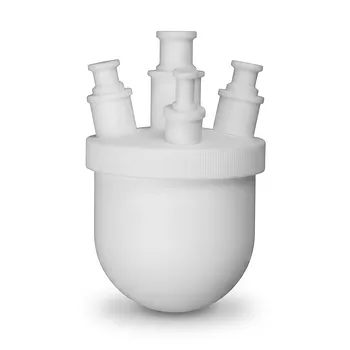
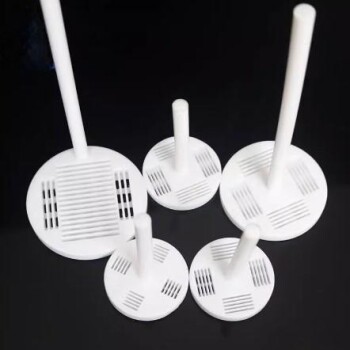
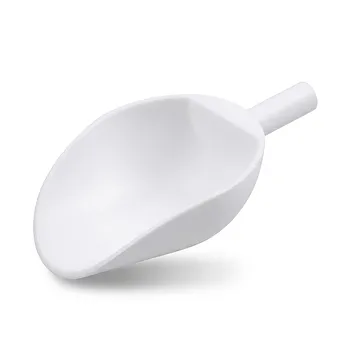
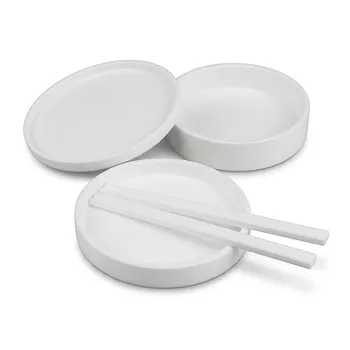
At its core, the industrial application of Teflon (PTFE) extends far beyond non-stick cookware into nearly every high-performance sector. Its unique combination of properties makes it a critical material for manufacturing, aerospace, chemical processing, and medicine, where it is used for everything from seals and bearings to life-saving medical implants and waterproof fabrics.
The true value of Teflon in industry is not derived from a single characteristic, but from its rare combination of extreme chemical inertness, exceptionally low friction, and high thermal and electrical resistance. This versatility is why it solves problems in wildly different fields.

The Go-To Material for Harsh Chemical Environments
Teflon's defining feature is its near-total immunity to chemical attack. This property makes it indispensable in industries that handle corrosive or reactive substances.
Why Chemical Inertness Matters
Because it is a fluoropolymer, Teflon does not react with the vast majority of industrial chemicals, acids, and bases. This prevents contamination of the product and degradation of the equipment itself.
Linings, Seals, and Gaskets
This non-reactivity makes it the premier choice for lining pipes, tanks, and laboratory equipment that will contain aggressive chemicals. It is also machined into high-performance seals and gaskets for the automotive and aerospace industries, ensuring system integrity.
Food and Pharmaceutical Production
In commercial food production, Teflon is used for conveyor belts and processing equipment. Its non-stick surface resists oils and food residues, simplifying cleaning, while its chemical inertness ensures food purity. A similar principle applies to pharmaceutical packaging and manufacturing.
Solving Problems of Friction and Wear
Teflon has one of the lowest coefficients of friction of any known solid material, often compared to wet ice on wet ice. This makes it a fundamental component in mechanical and automotive systems.
The Power of Low Friction
This "slipperiness" allows moving parts to operate with minimal energy loss and significantly reduced wear and tear. It performs reliably without the need for liquid lubricants, which can be a point of failure or contamination.
Bearings, Bushings, and Coatings
Teflon is widely used to create anti-friction devices such as self-lubricating bearings and bushings in machinery. It is also applied as a coating on engine parts and in brake systems to ensure smooth, reliable operation over long periods.
The Standard for Biocompatibility and Safety
In the medical field, a material's interaction with the human body is the most critical factor. Teflon's inertness makes it exceptionally biocompatible.
Non-Reactivity with Body Tissues
Teflon does not trigger an immune response or react with bodily tissues and fluids. This makes it an ideal material for devices that will be placed inside the human body.
Medical Implants and Devices
This biocompatibility allows for its use in creating artificial bones, heart valves, and dentures. It is also used for catheters and durable sutures.
Sterility and Instrument Coatings
Teflon's smooth, non-porous surface is resistant to bacteria. It is used to coat surgical instruments and sterilization equipment to reduce friction and help maintain a sterile environment.
Enabling Performance Under Extreme Conditions
From rocket engines to semiconductors, many industries operate at temperature extremes where lesser materials would fail. Teflon provides a stable, reliable solution.
High-Temperature Stability
Teflon maintains its structural integrity and performance characteristics across a wide temperature range. This makes it suitable for high-heat applications.
Aerospace and Defense
In the aerospace sector, Teflon is used for nose cones and heat shields on spacecraft, as well as seals and fuel tank components that must perform reliably under intense heat and pressure.
Electrical Insulation
As an excellent electrical insulator that remains stable at high temperatures, Teflon is used to insulate high-performance wiring and create specialized electrical components, particularly in the semiconductor industry.
Understanding the Trade-offs
While incredibly versatile, Teflon is not a universal solution. Understanding its limitations is key to applying it correctly.
Mechanical Strength
Teflon is a relatively soft material. While its low friction is a major advantage, it does not possess the structural strength, rigidity, or wear resistance of metals for high-load applications.
Temperature Boundaries
Despite its high heat resistance, Teflon has a definitive melting point (around 327°C or 621°F). Beyond this, it will degrade, making it unsuitable for the most extreme temperature environments where ceramics or exotic metals are required.
Fabrication Complexity
Machining Teflon parts requires specialized knowledge. Its softness and thermal properties mean that standard techniques can result in poor tolerances or damage to the material.
Making the Right Choice for Your Goal
Selecting Teflon is about matching its unique properties to a specific engineering challenge.
- If your primary focus is chemical resistance: Teflon is the unmatched choice for lining containers, pipes, and creating seals in corrosive environments.
- If your primary focus is reducing friction: Use Teflon for self-lubricating bearings, low-wear coatings, and other anti-friction components in mechanical systems.
- If your primary focus is biocompatibility: Its inertness makes it the gold standard for medical implants, catheters, and coatings on surgical tools.
- If your primary focus is thermal and electrical insulation: Teflon is a reliable option for high-performance wiring, seals, and components in aerospace and electronics.
Ultimately, understanding these core properties empowers you to leverage this remarkable material to solve some of engineering's toughest challenges.
Summary Table:
| Application Area | Key Teflon (PTFE) Uses | Core Properties Utilized |
|---|---|---|
| Chemical Processing | Linings, Seals, Gaskets | Extreme Chemical Inertness |
| Mechanical Systems | Bearings, Bushings, Coatings | Low Friction, Self-Lubricating |
| Medical & Pharmaceutical | Implants, Catheters, Instrument Coatings | Biocompatibility, Sterility |
| Aerospace & Electronics | Wiring Insulation, Heat Shields | High-Temp Stability, Electrical Resistance |
Need custom PTFE components for your industrial application? KINTEK specializes in precision manufacturing of Teflon seals, liners, labware, and more for the semiconductor, medical, laboratory, and industrial sectors. From prototypes to high-volume orders, we deliver reliable performance for harsh environments. Contact our experts today to discuss your project requirements!
Visual Guide

Related Products
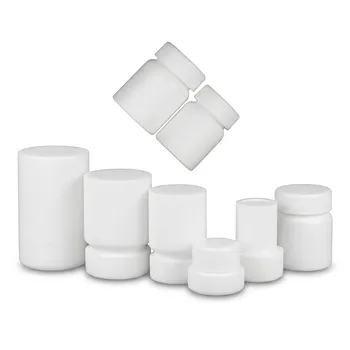
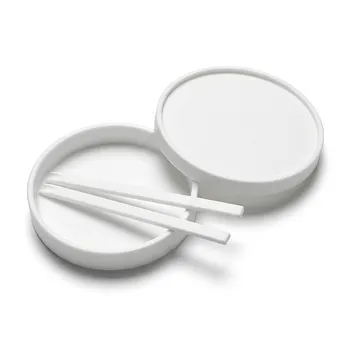
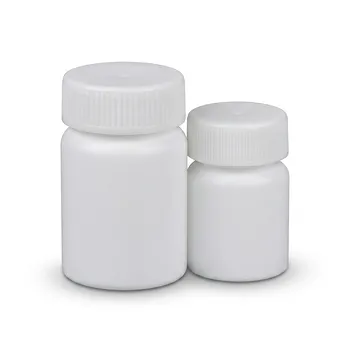
- PTFE Small Reaction Bottle Corrosion Resistant Teflon Sample Dissolution Tank One Piece Molded Fluoropolymer Storage Container
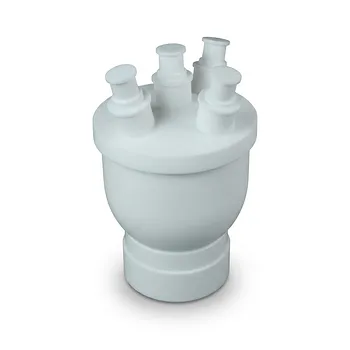
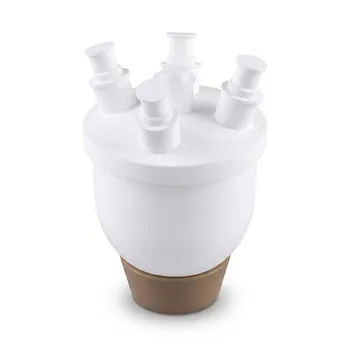
- Customizable Polytetrafluoroethylene PTFE Reactor and Corrosion Resistant Teflon Flask
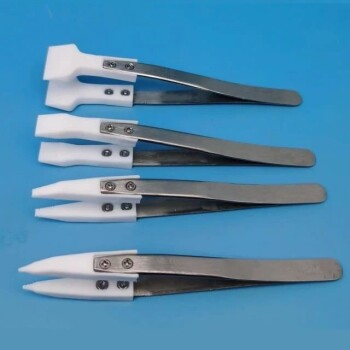
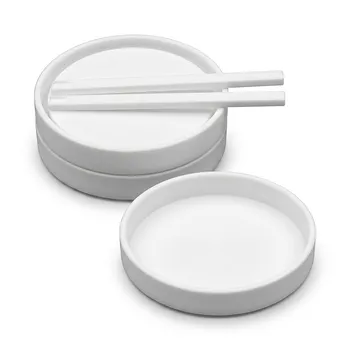
- Custom PTFE Parts Manufacturer for Teflon Parts and PTFE Tweezers
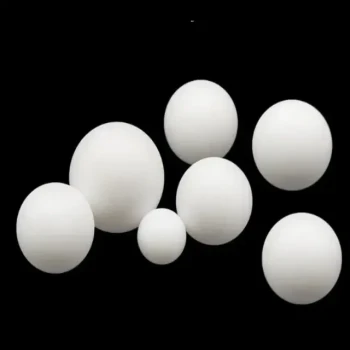
- Custom PTFE Teflon Balls for Advanced Industrial Applications
- Corrosion Resistant PTFE Small Reaction Bottle One Piece Molded Teflon Sample Storage Tank
People Also Ask
- What are the temperature limits for the PTFE bottle? Ensure Safety from -200°C to 260°C
- What are the advantages of the PTFE bottle's non-stick surface? Ensure Purity and Efficiency in Your Lab
- How do Polytetrafluoroethylene (PTFE) containers perform regarding gas permeation? Expert Insights on Solvent Absorption
- What are the key features of PTFE reagent bottles? Superior Chemical Resistance and Durability
- What are the main advantages of PTFE as a material for laboratory bottles? Superior Chemical & Thermal Resistance