The Tyranny of a Single Metric
In engineering, we are drawn to superlatives. The strongest metal, the fastest processor, the lowest friction material. For decades, Polytetrafluoroethylene (PTFE) has held one of these titles. Its near-zero coefficient of friction made it the default choice for self-lubricating, smooth-motion systems.
This allure is understandable. In a high-precision laboratory instrument or a sensitive semiconductor handling system, the effortless glide of PTFE is not a luxury; it's a core functional requirement. It promises a world of maintenance-free, silent operation.
But chasing a single metric often obscures the system's true needs. An engineering decision is a statement of priorities, and sometimes, the world demands more than just low friction.
When Reality Pushes Back
The real world is a place of immense pressure, extreme temperatures, and ever-stricter regulations. It is in this complex environment that the conversation shifts from PTFE to PTFE-free alternatives. This isn't about replacing a champion, but about expanding the toolkit.
Three primary forces are driving this evolution.
1. The Pressure of Physical Load
Imagine a heavy-duty hydraulic actuator in an earthmover or a critical joint in industrial machinery. Here, the primary challenge isn't just friction; it's the immense, sustained force.
Standard, unfilled PTFE can be susceptible to "cold flow"—a slow, permanent deformation under heavy load. While filled-PTFE variants were developed to combat this, a new class of PTFE-free bushings was engineered from the ground up for compressive strength. They are designed not to yield when the system needs them to hold firm.
2. The Pressure of Lubrication
This is one of engineering's subtle ironies. PTFE is so effective as a self-lubricant that it can perform poorly in systems that are already lubricated. Its properties are optimized for running dry.
PTFE-free materials, however, are often designed to work in concert with external lubricants. In a pre-lubricated automotive or aerospace system, this compatibility is a massive advantage. The bushing and the lubricant become partners, enhancing performance and extending service life in ways a dry-running material cannot.
3. The Pressure of Compliance
Beyond the physical constraints are the regulatory and environmental ones. Growing concerns around fluoropolymers (PFAS) are reshaping what is acceptable in manufacturing.
PTFE-free components directly answer this call. They eliminate these materials from the supply chain, align with corporate sustainability goals, and often utilize recyclable compounds. In today's world, compliance is not an afterthought; it is a fundamental design constraint.
The Anatomy of a Decision
Material science rarely offers a free lunch. The choice between PTFE and PTFE-free is a deliberate balancing act. It requires asking the right questions not about the material in isolation, but about the system as a whole.
To make the right choice, consider your primary design driver:
| If your primary focus is... | Your best starting point is likely... | Because... |
|---|---|---|
| Absolute Low Friction (Dry) | Traditional PTFE | It remains unmatched for self-lubricating, smooth, maintenance-free motion. |
| High Load & Pressure Resistance | PTFE-Free or Filled-PTFE | They are engineered for high compressive strength and wear tolerance. |
| Compatibility with Lubricants | PTFE-Free Bushings | They are designed to thrive in lubricated systems, enhancing overall life. |
| Environmental & Regulatory Compliance | PTFE-Free Bushings | They eliminate specific fluoropolymers to meet modern standards. |
This isn't just about reading a spec sheet. It's about understanding the silent conversation between a component and its environment.
At KINTEK, we specialize in manufacturing the high-precision PTFE and advanced polymer components that resolve these engineering dilemmas. Whether you need the unparalleled low friction of a PTFE seal for a medical device or the robust durability of a custom liner for an industrial application, our expertise spans the full spectrum of material trade-offs. We help you move from a component choice to a complete system solution.
Navigating these decisions requires a deep understanding of material science and application demands. Let us help you find the perfect balance for your next project. Contact Our Experts
Visual Guide

Related Products
- Custom PTFE Filtration System Acid Resistant High Purity Semiconductor Grade Chemical Processing Filter
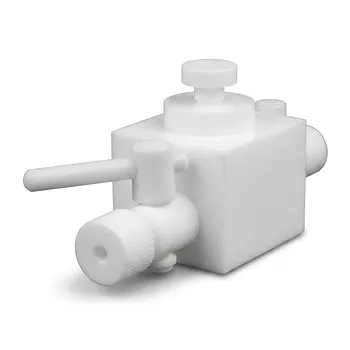
- High Corrosion Resistant PTFE Faucet Polytetrafluoroethylene Valve for Chemical Storage Drums and Fluid Transfer Systems Customizable Industrial Grade
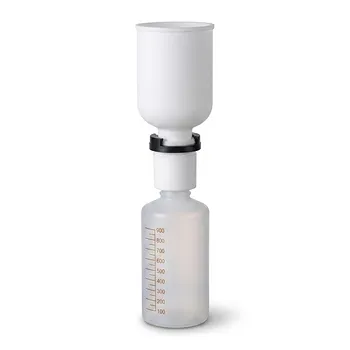
- PTFE PFA Vacuum Filtration System Corrosion Resistant Customizable Shatterproof Laboratory Device
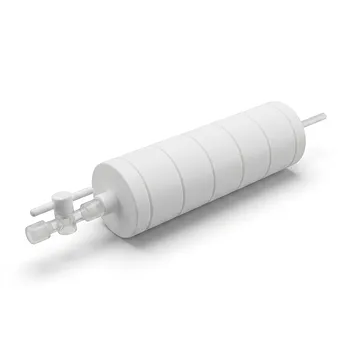
- PTFE Corrosion Resistant Filter with PFA Valve Connections and Integrated Sieve Plate
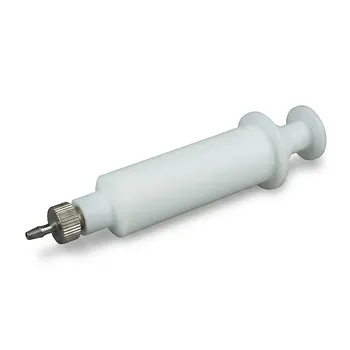
- High Temperature Chemical Resistant 50ml PTFE Syringe Customized Teflon Injector with Threaded Seal for Trace Analysis
Related Articles
- The Physics of a Perfect Fit: How PTFE Eliminates an Athlete's Hidden Distractions
- The Invisible Threat: Why Material Inertness Defines Success in Ultra-Pure Systems
- The Hidden Risk of PTFE: Why Your Go-To Material Is Now a Liability—And What to Do About It
- The Unseen Workhorse: Why PTFE Is the Default Choice for Impossible Problems
- Beyond Sanitization: Why Your Material Choice Is the Real Key to Preventing Contamination