In the world of automotive engineering, few materials solve as many critical challenges as Polytetrafluoroethylene (PTFE). It is widely used because its unique combination of properties—high-temperature stability, extreme chemical resistance, and an exceptionally low coefficient of friction—makes it the ideal material for components that must survive harsh environments while ensuring efficiency and preventing leaks.
The core reason for PTFE's prevalence in the automotive industry is not one single attribute, but its rare ability to simultaneously resist heat, fight chemical corrosion, and minimize friction, making it indispensable for creating reliable and efficient seals, gaskets, and linings.
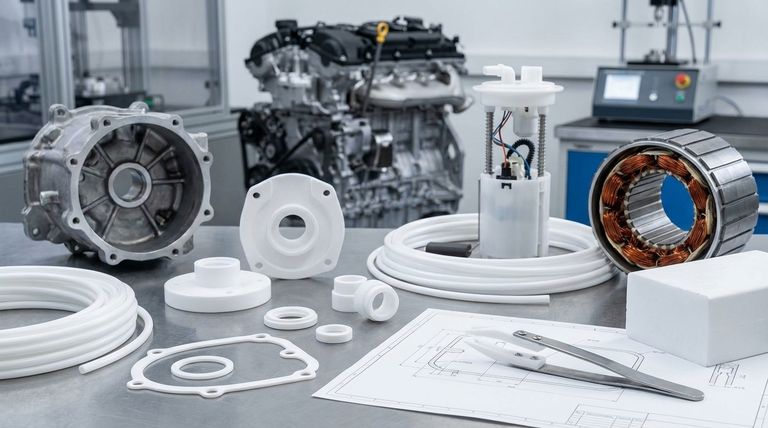
The Core Engineering Problems PTFE Solves
PTFE is not just a material choice; it is a solution to fundamental challenges in vehicle performance and longevity. Engineers specify it to address issues that common plastics and elastomers cannot handle.
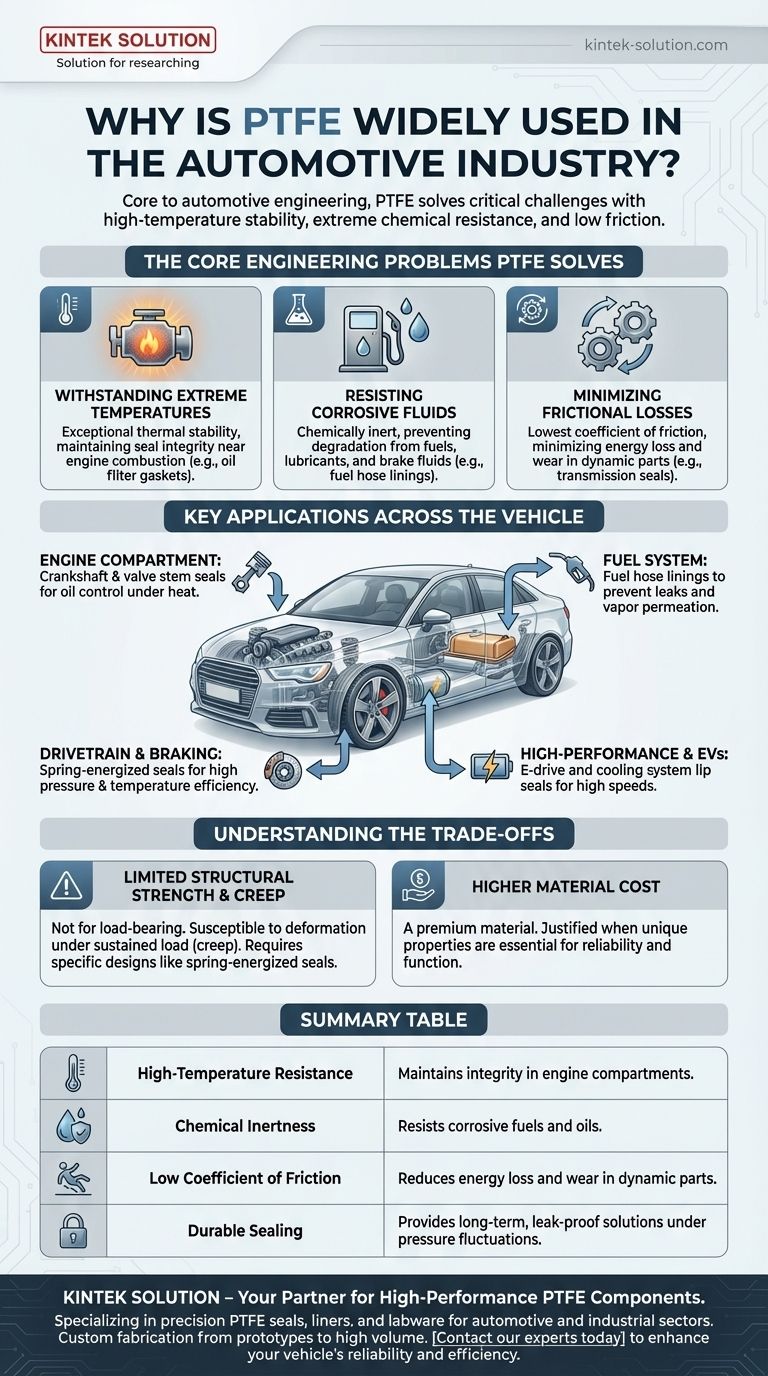
Withstanding Extreme Temperatures
Many automotive components operate in environments with intense heat, particularly within the engine compartment.
PTFE has exceptional thermal stability and high-temperature resistance. This allows it to maintain its integrity and sealing capability in direct proximity to engine combustion, such as in gaskets for oil filters and fuel pumps.
Resisting Corrosive Fluids
A vehicle relies on a range of aggressive fluids, including fuels, lubricants, oils, and braking fluids, which can degrade lesser materials over time.
PTFE is almost completely chemically inert. This makes it the perfect choice for fuel hose linings and seals, as it does not break down or react when exposed to corrosive chemicals, preventing leaks and ensuring system integrity.
Minimizing Frictional Losses
Efficiency is a primary goal in modern vehicle design. Friction between moving parts leads to energy loss, heat generation, and component wear.
With one of the lowest coefficients of friction of any solid material, PTFE is an ideal surface for dynamic applications. It is used in rotary shaft lip seals, guide strips, and transmission components to minimize energy loss and extend the lifespan of parts.
Ensuring Long-Term Sealing and Reliability
Seals and gaskets are critical for preventing fluid leaks and maintaining pressure in systems like engines, transmissions, and brakes.
PTFE provides durable, leak-proof solutions that are dependable over a long lifespan. Spring-energized PTFE seals, for example, provide effective sealing under high pressure and temperature fluctuations, enhancing overall vehicle reliability.
Key Applications Across the Vehicle
PTFE is found in nearly every critical system of a modern car, from the engine to the electric drivetrain.
In the Engine Compartment
The engine is the most demanding environment. PTFE is used for engine crankshaft seals to prevent oil leaks and for valve stem seals to control oil consumption, all while withstanding extreme heat and pressure.
In the Fuel System
To ensure safe and efficient fuel delivery, PTFE is used as a lining in fuel hoses. Its chemical resistance prevents the fuel from degrading the hose and stops fuel vapor from permeating through the material.
In Drivetrain and Braking Systems
In transmissions and braking systems, PTFE seals must manage high pressures and temperatures while minimizing friction. Spring-energized seals and guide strips are used here to enhance efficiency and reliability.
For High-Performance and Electric Vehicles (EVs)
The demands of high-performance vehicles amplify the need for superior materials. PTFE lip seals are used in NASCAR engine drive shafts and, increasingly, in the e-drive and cooling systems of electric vehicles that operate at very high speeds.
Understanding the Trade-offs
While its benefits are significant, PTFE is not a universal solution. An objective assessment requires understanding its limitations.
Limited Structural Strength
PTFE is a relatively soft material and is not suitable for load-bearing structural applications. Its value is as a seal, lining, or low-friction surface, often integrated with stronger metal or polymer components.
Susceptibility to Creep
Under a sustained load, especially at elevated temperatures, PTFE can slowly deform over time. This phenomenon, known as creep, must be accounted for in component design, which is why designs like spring-energized seals exist to maintain constant pressure.
Higher Material Cost
Compared to common elastomers and plastics, PTFE is a premium material with a higher cost. Its use is therefore justified in applications where its unique performance is not just beneficial, but absolutely necessary for the vehicle's function and reliability.
Making the Right Choice for Your Goal
Selecting PTFE should be a deliberate decision based on specific engineering requirements.
- If your primary focus is maximizing efficiency and reducing wear: Use PTFE for its low-friction properties in dynamic components like shaft seals, guide strips, and transmission parts.
- If your primary focus is ensuring reliability in high-heat environments: Specify PTFE for engine components like crankshaft seals and gaskets that are exposed to high temperatures and corrosive fluids.
- If your primary focus is fluid containment and chemical resistance: Leverage PTFE's inertness for fuel hose linings and any seal that comes into contact with aggressive lubricants or fuels.
Understanding how to leverage PTFE's distinct profile of thermal, chemical, and frictional resistance is key to solving some of the most difficult challenges in modern vehicle design.
Summary Table:
| Property | Benefit in Automotive Applications |
|---|---|
| High-Temperature Resistance | Maintains integrity in engine compartments (e.g., crankshaft seals). |
| Chemical Inertness | Resists corrosive fuels and oils (e.g., fuel hose linings). |
| Low Coefficient of Friction | Reduces energy loss and wear in dynamic parts (e.g., transmission seals). |
| Durable Sealing | Provides long-term, leak-proof solutions under pressure and temperature fluctuations. |
Need high-performance PTFE components for your automotive application?
KINTEK specializes in manufacturing precision PTFE seals, liners, and labware for the automotive, semiconductor, medical, and industrial sectors. We offer custom fabrication from prototypes to high-volume orders to meet your exact specifications.
Contact our experts today to discuss how our PTFE solutions can enhance your vehicle's reliability and efficiency.
Visual Guide
Related Products
- Custom PTFE Filtration System Acid Resistant High Purity Semiconductor Grade Chemical Processing Filter
- High Corrosion Resistant PTFE Faucet Polytetrafluoroethylene Valve for Chemical Storage Drums and Fluid Transfer Systems Customizable Industrial Grade
- PTFE PFA Vacuum Filtration System Corrosion Resistant Customizable Shatterproof Laboratory Device
- PTFE Corrosion Resistant Filter with PFA Valve Connections and Integrated Sieve Plate
- High Temperature Chemical Resistant 50ml PTFE Syringe Customized Teflon Injector with Threaded Seal for Trace Analysis
People Also Ask
- What makes PTFE filtration systems advantageous for industrial and scientific use? Unmatched Chemical & Thermal Stability
- What sizes and pore options are available for PTFE filters? Choose the Right Filter for Your Application
- What steps are involved in selecting the proper PTFE filter? A 4-Step Guide to Optimal Filtration
- What temperature resistance do PTFE filters offer? Unmatched Thermal Stability from -200°C to +260°C
- How does the hydrophobicity of PTFE filters benefit their use? Ensure Uninterrupted Gas Flow and Solvent Filtration