The core advantages of Teflon bushes stem from a unique combination of properties that make them exceptionally reliable in demanding industrial settings. They offer extremely low friction, unmatched chemical resistance, and stability across a wide range of temperatures. This translates directly into reduced maintenance, enhanced equipment lifespan, and consistent performance where other materials would quickly degrade.
The true value of Teflon bushes lies not in a single feature, but in their ability to provide maintenance-free, predictable performance in environments defined by chemical corrosion, extreme temperatures, and high friction. They are a solution for operational resilience.
The Pillars of Teflon's Performance
Teflon (PTFE) bushes derive their advantages from a few fundamental material properties that set them apart from metals, other plastics, and composites. Understanding these pillars is key to deploying them effectively.
Pillar 1: Exceptionally Low Friction
Teflon possesses one of the lowest coefficients of friction of any solid material. This creates a naturally self-lubricating and non-stick surface.
This property is critical for applications with constant motion, as it drastically reduces the energy required for movement and minimizes heat generation from friction.
Pillar 2: Unmatched Chemical Inertness
Teflon is highly resistant to nearly all industrial chemicals, including aggressive acids, solvents, and oils.
This chemical inertness makes it an ideal choice for machinery in chemical plants, pharmaceutical manufacturing, and laboratory equipment where exposure to corrosive substances is constant.
Pillar 3: Extreme Thermal Stability
Teflon bushes perform reliably across an exceptionally broad temperature range, from cryogenic lows of -275°C (-463°F) up to continuous operating temperatures of 260°C (500°F), with short-term peaks near 327°C (621°F).
This stability ensures the material does not become brittle in the cold or degrade in high-heat applications, a common failure point for many other polymers.
Translating Properties into Operational Value
These core properties deliver tangible, real-world benefits that impact an operation's bottom line through reliability and longevity.
High Durability and Wear Resistance
The combination of low friction and material toughness makes Teflon bushes highly resistant to abrasion, wear, and deformation.
They maintain their integrity even under constant motion, heavy loads, or significant vibration, ensuring long-term performance.
Superior Electrical Insulation
As an excellent electrical insulator, Teflon prevents the flow of electricity. This makes it invaluable for applications where components must be mechanically supported but electrically isolated.
Reduced Maintenance and Downtime
The self-lubricating nature of Teflon eliminates the need for external greasing or oiling, simplifying design and removing a frequent maintenance task.
This reliability, combined with a long service life, leads directly to reduced equipment downtime and lower operational costs.
Understanding the Trade-offs
While its advantages are significant, Teflon is not the universally perfect material for every application. An objective evaluation requires acknowledging its limitations.
Mechanical Strength and Load
Compared to metals like steel or bronze, Teflon has lower compressive strength and rigidity. In applications with extremely high static loads, it can be susceptible to deformation.
Tendency for "Creep"
Under a sustained load, Teflon can exhibit a phenomenon known as "creep" or "cold flow," where the material slowly deforms over time. This must be a consideration in high-load, precision-critical designs.
Thermal Expansion
Teflon has a higher coefficient of thermal expansion than metals. This means it expands and contracts more with temperature changes, a factor that engineers must account for when setting clearances and tolerances.
When to Choose Teflon Bushes
Your final decision should be guided by the primary challenge you need to solve in your specific application.
- If your primary focus is operating in corrosive chemical environments: Teflon's chemical inertness is its greatest strength, ensuring it will not degrade.
- If your primary focus is reducing maintenance in a high-friction, clean application: Teflon's self-lubricating nature eliminates the need for external grease or oil.
- If your primary focus is performance across extreme temperature ranges: Teflon maintains its integrity from cryogenic lows to high-heat industrial processes.
- If your primary focus is electrical isolation: Teflon provides excellent insulation while serving its mechanical purpose.
By aligning the unique strengths of Teflon with your specific operational demands, you can engineer a more reliable and cost-effective system.
Summary Table:
| Key Advantage | Direct Benefit |
|---|---|
| Low Friction & Self-Lubricating | Reduces energy use, heat generation, and eliminates need for grease/oil. |
| Chemical Inertness | Resists corrosion from acids, solvents, and oils for long-term reliability. |
| Wide Temperature Range | Performs reliably from -275°C to 260°C (-463°F to 500°F). |
| Electrical Insulation | Provides mechanical support while isolating components electrically. |
Engineer a more resilient and cost-effective operation with precision Teflon components from KINTEK.
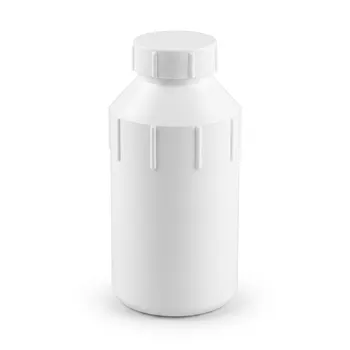
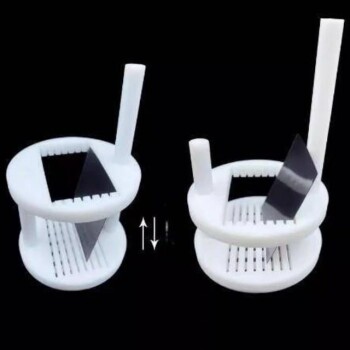
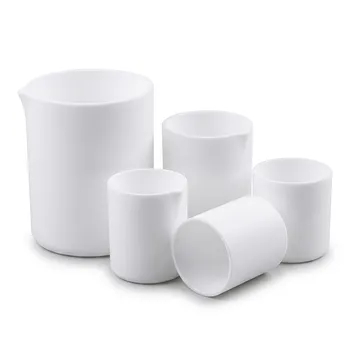
Our expertise in custom fabricating PTFE seals, liners, labware, and bushes ensures you get a solution perfectly tailored to your industrial, semiconductor, medical, or laboratory application—from prototypes to high-volume orders.
Contact our experts today to discuss how our components can solve your specific challenges with corrosion, friction, and temperature extremes.
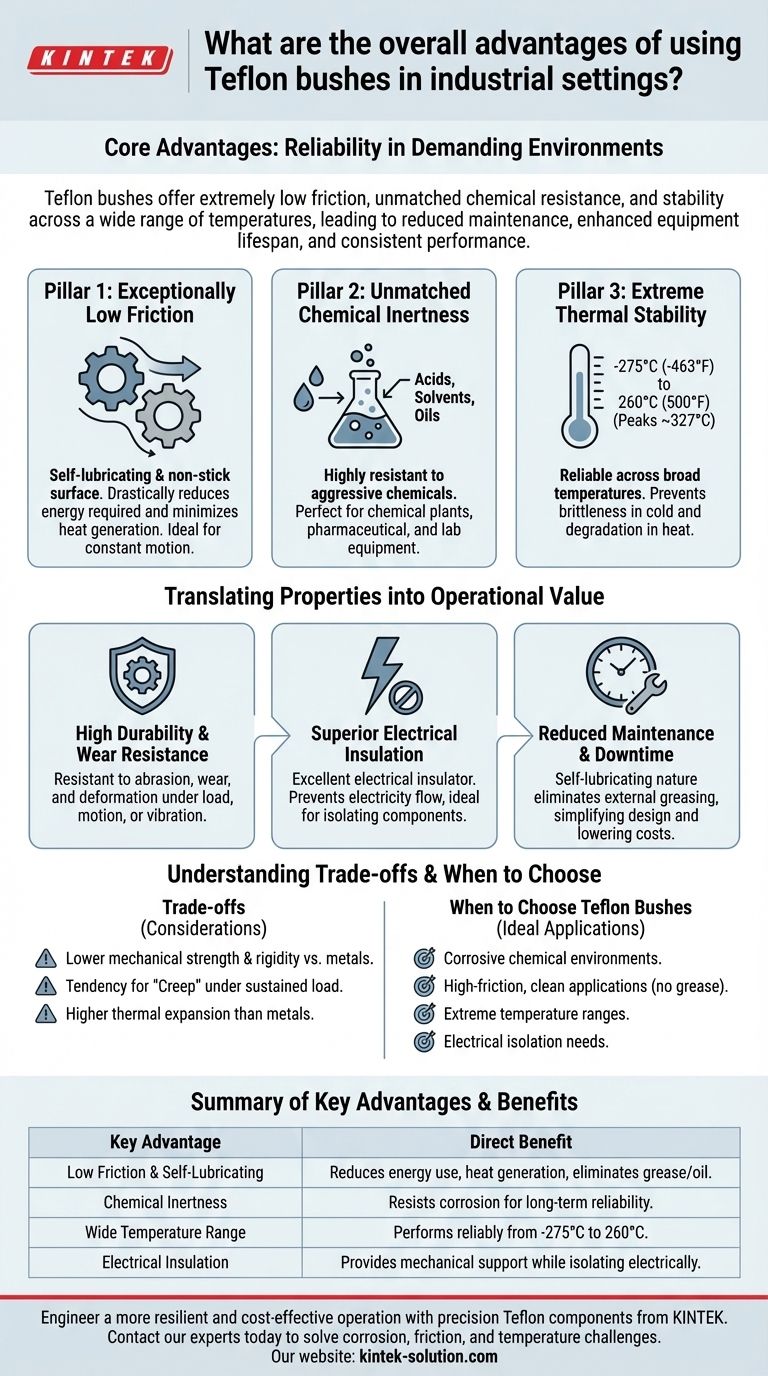
Visual Guide
Related Products
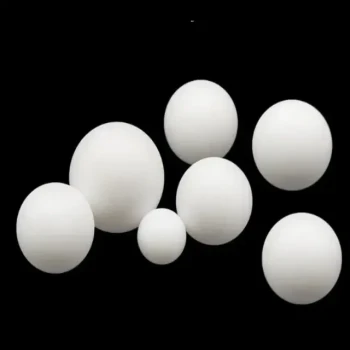
- Custom PTFE Teflon Balls for Advanced Industrial Applications
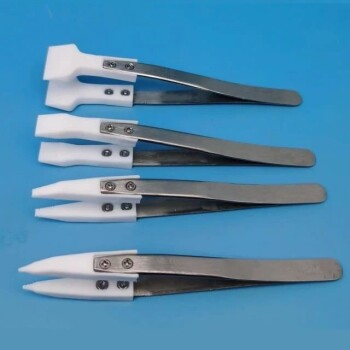
- Custom PTFE Parts Manufacturer for Teflon Parts and PTFE Tweezers
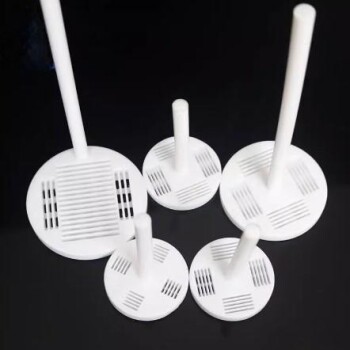
- Custom Machined Molded PTFE Teflon Parts Manufacturer for Laboratory ITO FTO Conductive Glass Cleaning Flower Basket
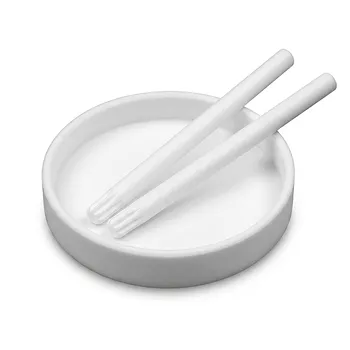
- Custom PTFE Petri Dishes Corrosion Resistant High Purity Low Background Labware
- Custom PTFE Condenser Tube Reflux Reaction Condensation Purification Device Semiconductor Chemical Lab Equipment
People Also Ask
- In what applications are PTFE balls highly functional? Ideal for Corrosive, Self-Lubricating Systems
- How do the chemical properties of PTFE balls influence their performance? Unmatched Durability in Harsh Environments
- What materials can PTFE balls be made from? Virgin, Modified, or Filled Compounds for Specific Performance
- What are the available grades of PTFE balls? Choose the Right Grade for Your Application
- What are the key properties of PTFE balls? Unlock Superior Performance for Demanding Applications