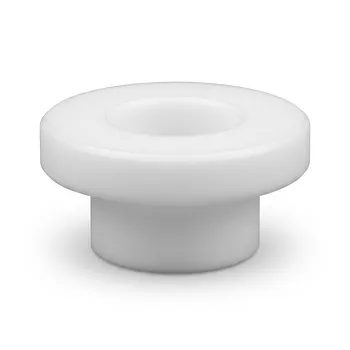
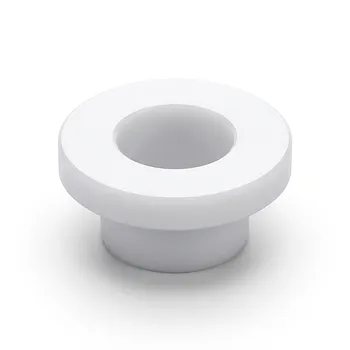
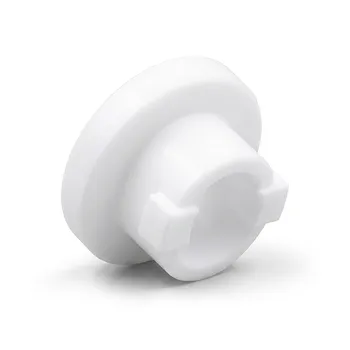
At their core, PTFE bushings are engineered polymer bearings designed for applications where traditional lubricated metal bearings fail. Their key features are an exceptionally low coefficient of friction, self-lubricating properties, and extreme resistance to both chemicals and high temperatures, enabling maintenance-free operation in hostile environments.
The central value of a PTFE bushing is its ability to eliminate the need for external lubrication entirely. This solves the fundamental problems of maintenance, contamination, and material failure in applications exposed to corrosive chemicals, extreme temperatures, or where cleanliness is critical.

The Core Principle: Eliminating Friction and Maintenance
The primary function of any bushing is to reduce friction between moving parts. PTFE bushings achieve this through the inherent properties of their material, Polytetrafluoroethylene, rather than relying on an external lubricant like grease or oil.
The Lowest Coefficient of Friction
PTFE boasts one of the lowest coefficients of friction of any solid material. This means surfaces slide against it with minimal resistance.
This property directly translates to smoother, quieter operation and reduced energy consumption. It also minimizes heat generation at high sliding speeds, which extends the service life of the entire assembly.
True Self-Lubrication
PTFE bushings are naturally self-lubricating. They operate completely dry, transferring a thin film of their own material to the mating surface to create an ultra-low-friction interface.
This eliminates the need for regular maintenance and removes the risk of lubricant failure due to heat, contamination, or washout. This is especially critical in applications that are inaccessible or operate continuously.
Contamination Resistance
Because they require no oil or grease, PTFE bushings are ideal for environments where cleanliness is paramount.
Their non-stick surface also prevents process materials, dust, or other contaminants from adhering to them, ensuring consistent performance in industries like food production, pharmaceuticals, and medical devices.
Excelling in Hostile Environments
Beyond their frictional properties, PTFE bushings are defined by their remarkable resilience. They are often the default choice when operating conditions are too severe for other materials.
Unmatched Chemical Inertness
PTFE is chemically unreactive and insoluble to nearly all industrial chemicals, acids, and bases.
This makes it the perfect material for equipment used in chemical processing, laboratories, or any application involving corrosive substances that would quickly degrade metal bearings.
Extreme Temperature Tolerance
PTFE bushings maintain their integrity and performance across a vast temperature range, typically from -200°C to +260°C (-328°F to +500°F).
This allows them to be used in everything from cryogenic equipment to high-temperature industrial ovens and machinery without becoming brittle or degrading.
Impervious to Moisture
The material is hydrophobic, meaning it does not absorb water. This prevents swelling, corrosion, or loss of performance in wet or high-humidity environments where other materials might fail.
Understanding the Trade-offs
While extremely capable, PTFE bushings are not a universal solution. Understanding their limitations is key to successful implementation.
Load and Speed Capacity
While often described as having a "high load capacity," this is relative to other polymers. Pure PTFE bushings have a lower compressive strength than metallic bearings like bronze.
For extremely high-load, low-speed applications, a metal-backed, PTFE-lined composite bushing may be a more appropriate choice to prevent deformation.
Potential for Cold Flow (Creep)
Under a constant, heavy load, PTFE can slowly deform over time in a process known as cold flow or creep.
This must be accounted for during the design phase. For applications with high static loads, reinforced or filled PTFE compounds are often used to improve creep resistance.
Thermal Expansion
Like all polymers, PTFE has a higher coefficient of thermal expansion than metals.
Engineers must design for this by allowing for appropriate operating clearance, ensuring the bushing does not bind or seize within its housing as temperatures fluctuate.
When to Choose a PTFE Bushing
Selecting the right bushing depends entirely on the primary demands of your application.
- If your primary focus is maintenance elimination: PTFE is the ideal choice for inaccessible locations or equipment where downtime for lubrication is unacceptable.
- If your primary focus is chemical and temperature resistance: It is the default solution for corrosive or extreme-temperature environments where metals and other plastics would degrade.
- If your primary focus is cleanliness and purity: Its self-lubricating and non-stick nature makes it perfect for food, medical, and pharmaceutical applications.
- If your primary focus is maximum load capacity: A pure PTFE bushing may not be suitable; investigate metal-backed composite bushings that combine the strength of metal with the low-friction surface of PTFE.
Ultimately, choosing a PTFE bushing is a decision to prioritize reliability and performance in the most demanding operational conditions.
Summary Table:
| Feature | Benefit |
|---|---|
| Low Coefficient of Friction | Smoother operation, reduced energy use, less heat generation |
| Self-Lubricating | Eliminates maintenance, ideal for inaccessible or clean environments |
| Chemical Inertness | Resists virtually all industrial chemicals, acids, and bases |
| High Temperature Tolerance | Performs from -200°C to +260°C (-328°F to +500°F) |
| Non-Stick & Hydrophobic | Resists contamination and moisture, perfect for food, pharma, and medical use |
Need a Reliable PTFE Bushing Solution?
PTFE bushings are critical for applications where maintenance, contamination, and material failure are not an option. KINTEK specializes in the precision manufacturing of high-performance PTFE components, including custom bushings, for the semiconductor, medical, laboratory, and industrial sectors.
We understand the demanding environments your equipment faces. Our expertise ensures you get a component that delivers:
- Zero Maintenance: Eliminate downtime and contamination from lubricants.
- Long-Term Reliability: Withstand corrosive chemicals and extreme temperatures.
- Precision Fit: Custom fabricated from prototypes to high-volume orders to meet your exact specifications.
Let us help you solve your most challenging application problems. Contact KINTEK today to discuss your custom PTFE bushing requirements!
Visual Guide

Related Products
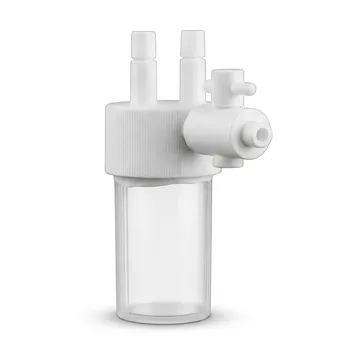
- Custom PTFE Gas Washing Bottle Cap Multi Port Reaction Lid Corrosion Resistant High Sealing Laboratory Fluoropolymer Closure
- Customizable PTFE Scrapers and Shovels for Demanding Applications
- High Corrosion Resistant PTFE Faucet Polytetrafluoroethylene Valve for Chemical Storage Drums and Fluid Transfer Systems Customizable Industrial Grade
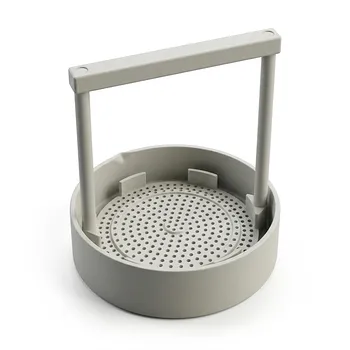
- Custom PTFE Laboratory Cleaning Basket Carrier High Purity Acid Base Resistant Wafer Holder Low Background Contamination Free Chemical Bath Rack
- PTFE Anti Scald Heat Insulation Sleeve Hot Plate Support Feet Laboratory Benchtop Protection Customizable Thermal Barrier
People Also Ask
- What material grades are available for PTFE caps? Choose the Right Grade for Purity or Performance
- What are the electrical insulation properties of PTFE caps? Superior Dielectric Performance for Demanding Applications
- What are the specialized types of PTFE caps and their uses? Ensure Sample Integrity and Safety
- What are the advantages of PTFE lids for jacketed and process vessels? Achieve Superior Durability & Chemical Resistance
- What are the reusability and durability characteristics of PTFE-lined bottle caps? Engineered for Repeated, Reliable Use