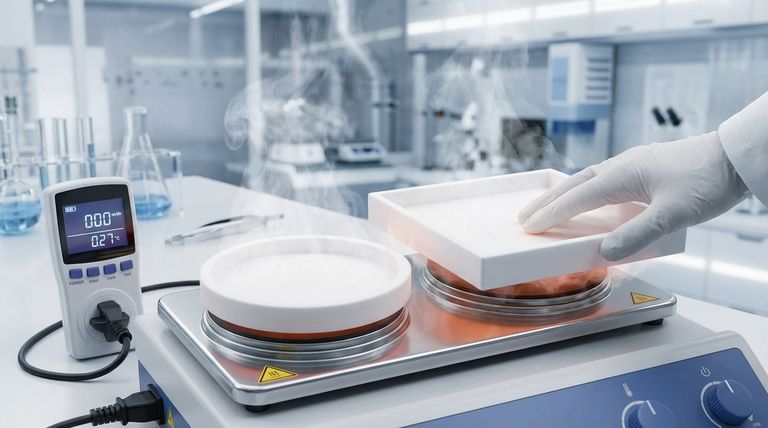
The primary benefits of a PTFE safety cover are threefold: it protects personnel from touching dangerously hot surfaces, it prevents hazardous spills from contacting those surfaces, and it can reduce equipment energy consumption by up to 15 percent. These covers act as a critical engineering control, enhancing both safety and operational efficiency in industrial and laboratory settings.
A PTFE safety cover is more than just a protective shield; it's a strategic component that leverages the unique material properties of PTFE—thermal stability, chemical inertness, and durability—to simultaneously improve workplace safety and reduce operating costs.
Why PTFE is the Material of Choice
The effectiveness of a safety cover is determined entirely by the material it's made from. Polytetrafluoroethylene (PTFE) possesses a rare combination of properties that make it uniquely suited for this demanding application.
Superior Thermal Insulation and Stability
PTFE has an exceptionally wide operating temperature range, performing reliably from cryogenic conditions up to +260°C (+500°F).
This high-temperature stability ensures the cover will not melt, degrade, or fail when placed over heated equipment, providing a consistent and reliable thermal barrier.
Unmatched Chemical Resistance
One of PTFE's defining features is its chemical inertness. It is highly resistant to nearly all industrial chemicals, including aggressive acids, bases, and solvents.
This means if a hazardous substance spills, the cover acts as an impenetrable shield, preventing the chemical from reaching the hot surface where it could cause a fire, release toxic fumes, or damage expensive equipment.
Inherent Durability and Longevity
PTFE is known for its durability. It has excellent weatherability and is resistant to UV light, ensuring it won't break down with environmental exposure.
Its surface is also non-adhesive and water-resistant, which prevents substances from sticking to it and makes cleanup simple. This contributes to a long, low-maintenance service life.
The Tangible Performance Gains
Deploying a PTFE safety cover translates the material's properties into measurable improvements in safety, risk mitigation, and financial performance.
Enhanced Personnel Safety
The most immediate benefit is the prevention of contact burns. The cover insulates the hot surface, reducing its external temperature to a safe level for incidental human contact, which is a critical aspect of workplace safety compliance.
Mitigation of Operational Hazards
By preventing spills from reaching hot components, PTFE covers directly mitigate the risk of fire and dangerous chemical reactions. This is especially crucial when working with flammable solvents or reactive chemicals.
Significant Energy and Cost Reduction
The insulating properties of the PTFE cover prevent heat from radiating away from the equipment.
This trapped heat means the system requires less energy to maintain its set operating temperature. This directly leads to lower power consumption—often by as much as 15%—and a clear reduction in operational costs.
Understanding the Trade-offs and Variations
While standard PTFE is exceptionally versatile, it's important to understand its specific characteristics to ensure it's right for the application.
Limitations of Standard PTFE
Pure PTFE, while chemically robust, can sometimes exhibit deformation or "creep" when placed under a heavy, sustained mechanical load. This is rarely an issue for a simple cover but is a consideration for structural applications.
The Role of Composite Materials
To enhance its mechanical properties for more demanding roles, PTFE is often blended with fillers. For example, carbon-filled PTFE offers significantly better compressive strength and wear resistance.
The addition of carbon also makes the material static-dissipative, a critical feature for environments where static discharge could be a hazard.
Making the Right Choice for Your Application
Selecting a PTFE safety cover is an investment in your operational integrity. Your primary goal will determine which benefit is most critical.
- If your primary focus is personnel safety and compliance: A PTFE cover is a fundamental engineering control that provides a reliable thermal and chemical barrier to protect your team.
- If your primary focus is operational efficiency and cost savings: The documented 15% reduction in energy consumption provides a clear and often rapid return on investment.
- If your primary focus is equipment longevity and process purity: The cover’s ability to act as a non-reactive shield protects valuable equipment from corrosion and spills, extending its service life.
Ultimately, a PTFE safety cover is a simple solution that delivers a powerful combination of safety, efficiency, and durability.
Summary Table:
| Benefit | Key Feature | Impact |
|---|---|---|
| Personnel Safety | Superior thermal insulation | Prevents contact burns, ensures compliance |
| Hazard Mitigation | Unmatched chemical resistance | Shields against spills, prevents fires/reactions |
| Cost Reduction | Excellent thermal stability | Cuts energy consumption by up to 15% |
| Durability | Chemical inertness & UV resistance | Long service life, low maintenance |
Ready to enhance your operational safety and efficiency? KINTEK specializes in manufacturing high-precision PTFE components, including custom safety covers for the semiconductor, medical, laboratory, and industrial sectors. From prototypes to high-volume orders, our expertise ensures you get a solution that protects your team, your equipment, and your bottom line.
Contact us today to discuss your specific requirements and discover the KINTEK difference!
Visual Guide

Related Products
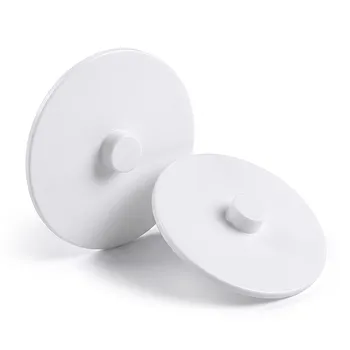
- Corrosion Resistant PTFE Beaker Lids High Temperature Custom Fluoropolymer Laboratory Covers Heavy Metal Free
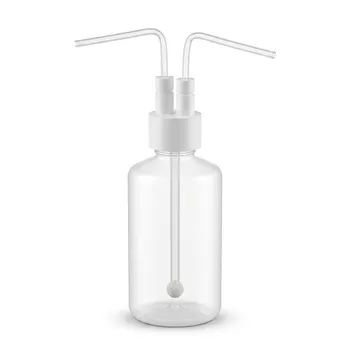
- Custom PTFE Gas Washing Bottle Cap Multi Port Reaction Lid Corrosion Resistant High Sealing Laboratory Fluoropolymer Closure
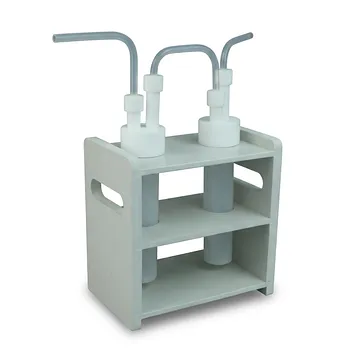
- PTFE Anti Scald Heat Insulation Sleeve Hot Plate Support Feet Laboratory Benchtop Protection Customizable Thermal Barrier
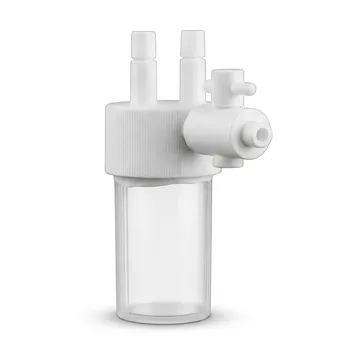
- Custom PTFE Reaction Lid with Integrated Valve and Fitting Corrosion Resistant No Leaching PFA FEP Bottle Cap System
- Custom PTFE Insulating Gaskets and Corrosion Resistant Fluoropolymer Seals for Industrial Electrical Applications
People Also Ask
- What are the advantages of PTFE lids for jacketed and process vessels? Achieve Superior Durability & Chemical Resistance
- Why is the material of the reaction vessel critical for tribocatalytic degradation? Boost Your Catalytic Yield!
- Why are high-purity vessels critical for BiFeO3 synthesis? Ensuring Phase Purity