In short, the primary advantages of PTFE ball valves are their exceptional chemical resistance, effortless low-torque operation without lubrication, and the ability to form a tight, reliable seal. These characteristics stem directly from the unique properties of Polytetrafluoroethylene (PTFE), making them a durable, low-maintenance, and cost-effective solution for a vast range of industrial applications.
The core takeaway is that a PTFE ball valve isn't just a valve; it's a problem-solving component. Its value comes from using a high-performance material (PTFE) to eliminate common valve failures related to corrosion, friction, and leakage, especially in demanding chemical or high-purity environments.

The Core Advantage: How PTFE Transforms Valve Performance
The performance of a ball valve is defined by its seats and seals. Using PTFE for these critical components fundamentally changes the valve's operational characteristics, making it superior in specific contexts.
### Unmatched Chemical and Corrosion Resistance
PTFE is a fluoropolymer that is chemically inert to nearly all industrial chemicals and solvents. This means the valve's wetted surfaces will not corrode or degrade when exposed to aggressive media, ensuring long service life and media purity.
### Exceptionally Low Friction and Torque
PTFE has one of the lowest coefficients of friction of any solid material. This property is why PTFE-seated valves require no lubrication and can be operated with minimal force. The quarter-turn action is fast, smooth, and requires less energy for automated actuation.
### Superior Sealing at Low Force
As a relatively soft and flexible material, PTFE can deform slightly to create a bubble-tight seal against the ball with very little pressure. This ensures reliable shutoff and prevents leaks, a critical function in any fluid control system.
### Wide Thermal Stability
PTFE maintains its integrity across a broad temperature range, typically from cryogenic levels up to +260°C (+500°F). This makes it suitable for applications involving both hot and cold process fluids, a versatility not found in many other polymer-based valves.
Operational and Economic Benefits
Beyond its core material science, a PTFE ball valve delivers tangible benefits in installation, operation, and total cost of ownership.
### Reduced Maintenance and Service Life
The combination of no lubrication requirements and resistance to chemical attack results in a long, maintenance-free service life. This reduces downtime and the associated labor costs over the valve's lifespan.
### Fast, Low-Shock Operation
The characteristic quarter-turn from fully open to fully closed is inherently fast. Because the operation is smooth and low-torque, it minimizes the hydraulic shock (or "water hammer") that can damage piping systems.
### Lower Cost and Simple Installation
Compared to exotic metal alloy valves designed for similar corrosive services, PTFE ball valves often provide a much better price-to-performance ratio. They are also typically lightweight, which simplifies handling and installation.
### Suitability for High-Purity Applications
Many grades of PTFE are FDA-approved and non-toxic. Its non-stick, easy-to-clean surface makes it an ideal choice for food and beverage, pharmaceutical, and other sanitary applications where media purity is paramount.
Understanding the Trade-offs
While highly effective, PTFE is not universally superior. Understanding its limitations is key to proper application and avoiding premature failure.
### Pressure and Temperature Boundaries
While its thermal range is wide, PTFE does have an upper limit. More importantly, its pressure rating often decreases as temperature increases. High pressure combined with high temperature can cause the PTFE seats to deform or "creep."
### Not Ideal for Abrasive Media
PTFE is a soft material. It offers excellent chemical resistance but poor abrasion resistance. Slurries or fluids containing hard particulates can quickly erode the PTFE seats, leading to valve failure. In such cases, a metal-seated or ceramic ball valve is a better choice.
### Potential for Creep Under Load
Under a constant, high mechanical load, PTFE can slowly deform over time, a phenomenon known as creep. This can eventually compromise the seal, particularly in high-pressure applications that remain static for long periods.
Making the Right Choice for Your Application
Selecting the correct valve depends entirely on the specific demands of your system.
- If your primary focus is handling corrosive chemicals: A PTFE ball valve is often the most reliable and cost-effective choice.
- If your primary focus is high-cycle automation: The low, consistent torque of a PTFE valve reduces wear on actuators and saves energy.
- If your primary focus is food-grade or high-purity processes: The FDA approval and non-stick properties of PTFE make it a default standard.
- If your primary focus is high-pressure steam or abrasive slurries: You should look beyond PTFE and consider valves with metal or ceramic seats.
Ultimately, choosing a PTFE ball valve is a strategic decision to prevent chemical attack and reduce operational friction in your fluid control system.
Summary Table:
| Advantage | Key Benefit | Ideal For |
|---|---|---|
| Chemical Resistance | Inert to nearly all chemicals and solvents | Corrosive fluid handling, chemical processing |
| Low Friction / Torque | Smooth, lubrication-free operation | High-cycle automation, energy efficiency |
| Bubble-Tight Seal | Reliable shutoff with low actuation force | Leak prevention, system integrity |
| Thermal Stability | Performs from cryogenic to +260°C (+500°F) | High/low-temperature processes |
| High Purity | FDA-approved, non-stick, easy-to-clean | Pharmaceutical, food & beverage, sanitary applications |
Need a reliable, high-performance valve solution for your demanding application?
At KINTEK, we specialize in the precision manufacturing of PTFE components, including custom ball valves, seals, and liners. Our expertise ensures you get a valve that delivers superior chemical resistance, low-maintenance operation, and a long service life.
We serve the semiconductor, medical, laboratory, and industrial sectors, providing custom fabrication from prototypes to high-volume orders.
Contact KINTEK today to discuss your specific requirements and get a solution tailored to your needs.
Visual Guide

Related Products
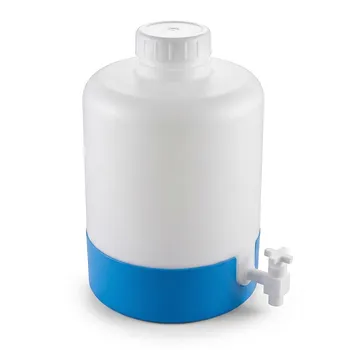
- High Purity PTFE Faucet Corrosion Resistant Polytetrafluoroethylene Drum Valve Customizable Lab Chemical Fluid Control
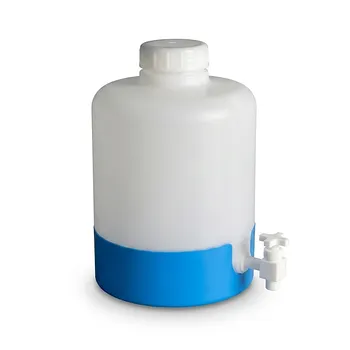
- High Corrosion Resistant PTFE Faucet Polytetrafluoroethylene Valve for Chemical Storage Drums and Fluid Transfer Systems Customizable Industrial Grade
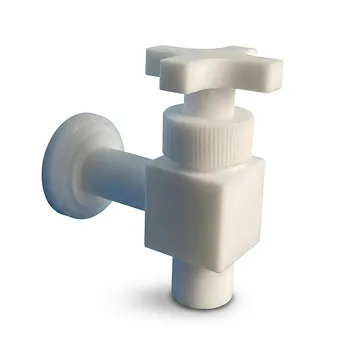
- Corrosion Resistant PTFE Polytetrafluoroethylene Valve and Customizable Laboratory Fluid Dispensing Faucet for Aggressive Chemical Handling in Industrial Storage Tanks and Plastic Drums
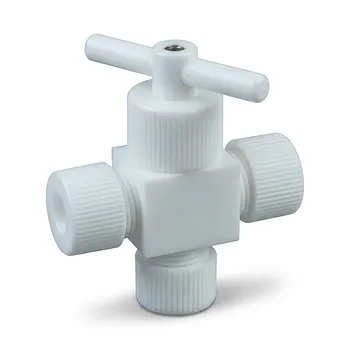
- Custom PTFE Valve 2-Way 3-Way Corrosion Resistant Low Background Virgin Fluoropolymer Industrial Fluid Control
- Custom PTFE Reaction Lid with Integrated Valve and Fitting Corrosion Resistant No Leaching PFA FEP Bottle Cap System
People Also Ask
- What are the key properties of PTFE valves? Ensure Purity, Safety, and Reliability in Demanding Processes
- What is the typical operating temperature and pressure range for PTFE valves? Key Specs for Optimal Performance
- What industries commonly use PTFE valves and components? Essential for Chemical & Purity Applications
- What specific advantages do PTFE valves offer? Unmatched Corrosion Resistance for Industrial Chemical Handling
- How do PTFE valves and components support high-purity liquid transfer? Ensure Product Integrity with Inert Materials