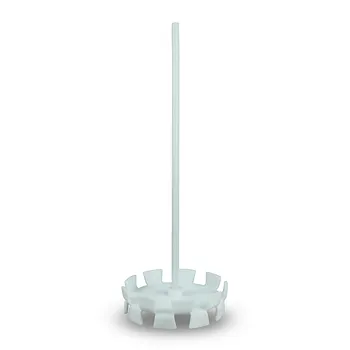
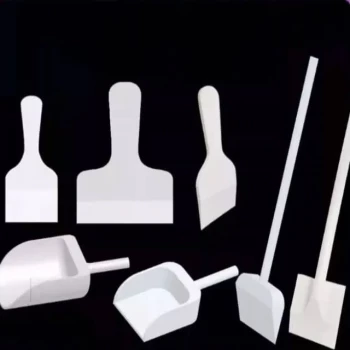
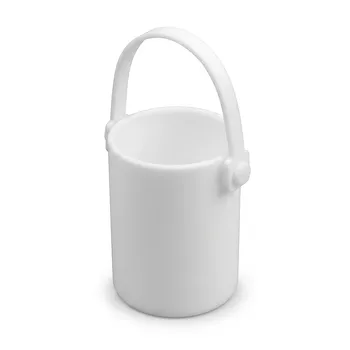
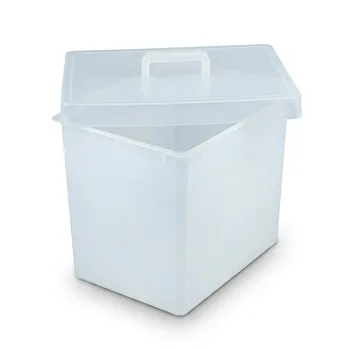
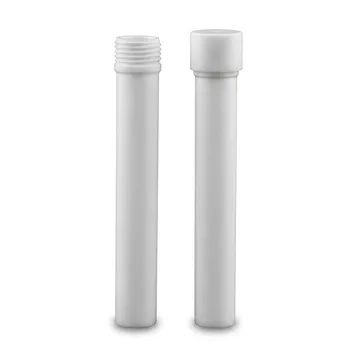
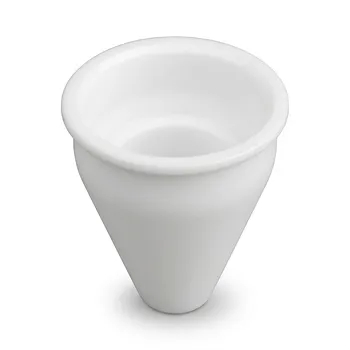
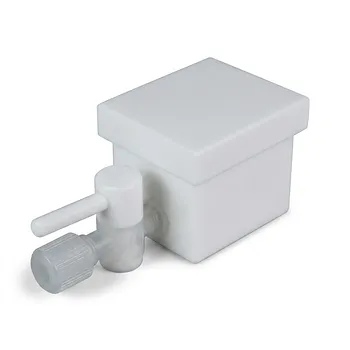
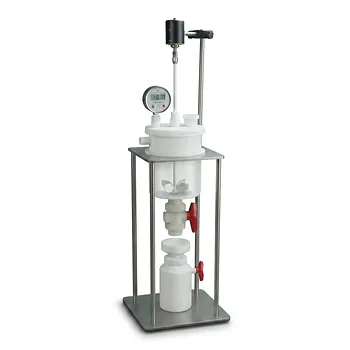
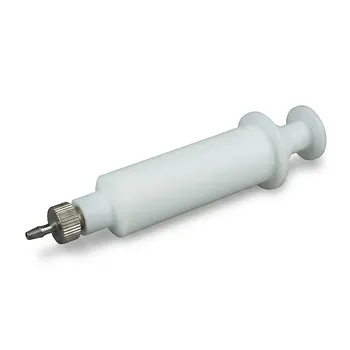
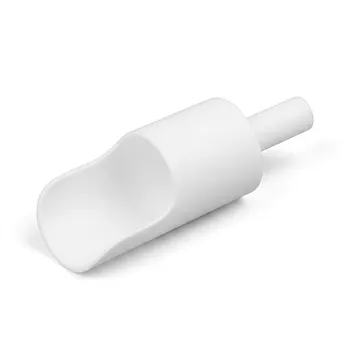
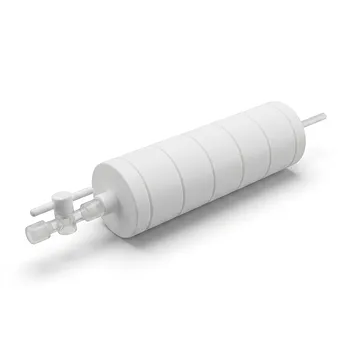
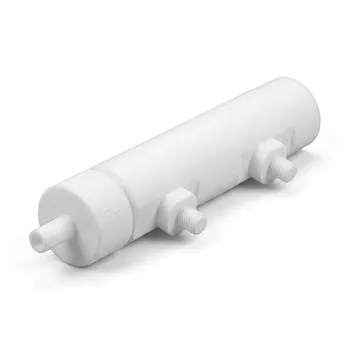
The applications for CNC machined Teflon are vast and mission-critical. You will find these components in nearly every high-performance industry, from aerospace to medicine. Common examples include high-purity valve components, non-reactive seals and gaskets, low-friction bearings and bushings, and biocompatible medical implants.
Teflon (PTFE) is rarely chosen for a single trait. It becomes the material of choice when a component requires an unmatched combination of extreme chemical inertness, an exceptionally low-friction surface, and high-temperature stability, making it essential for parts that must perform reliably in the most demanding environments.
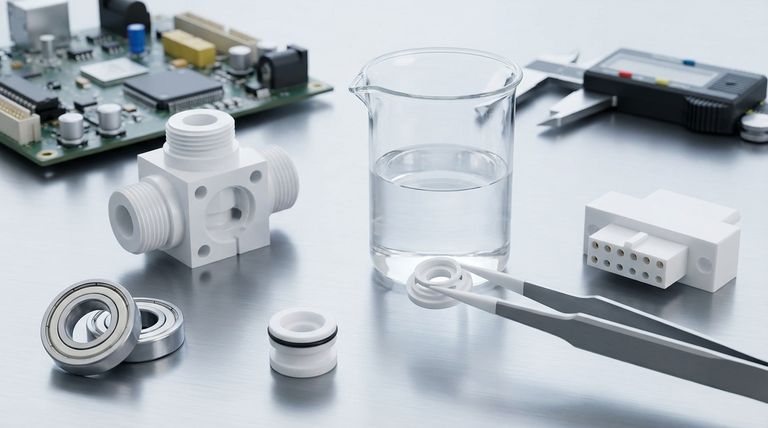
Why Teflon Excels in Specific Machining Applications
The decision to machine a part from Teflon is almost always driven by its unique material properties. Understanding these properties reveals why it is specified for such a wide range of critical components.
For Sealing and Fluid Handling
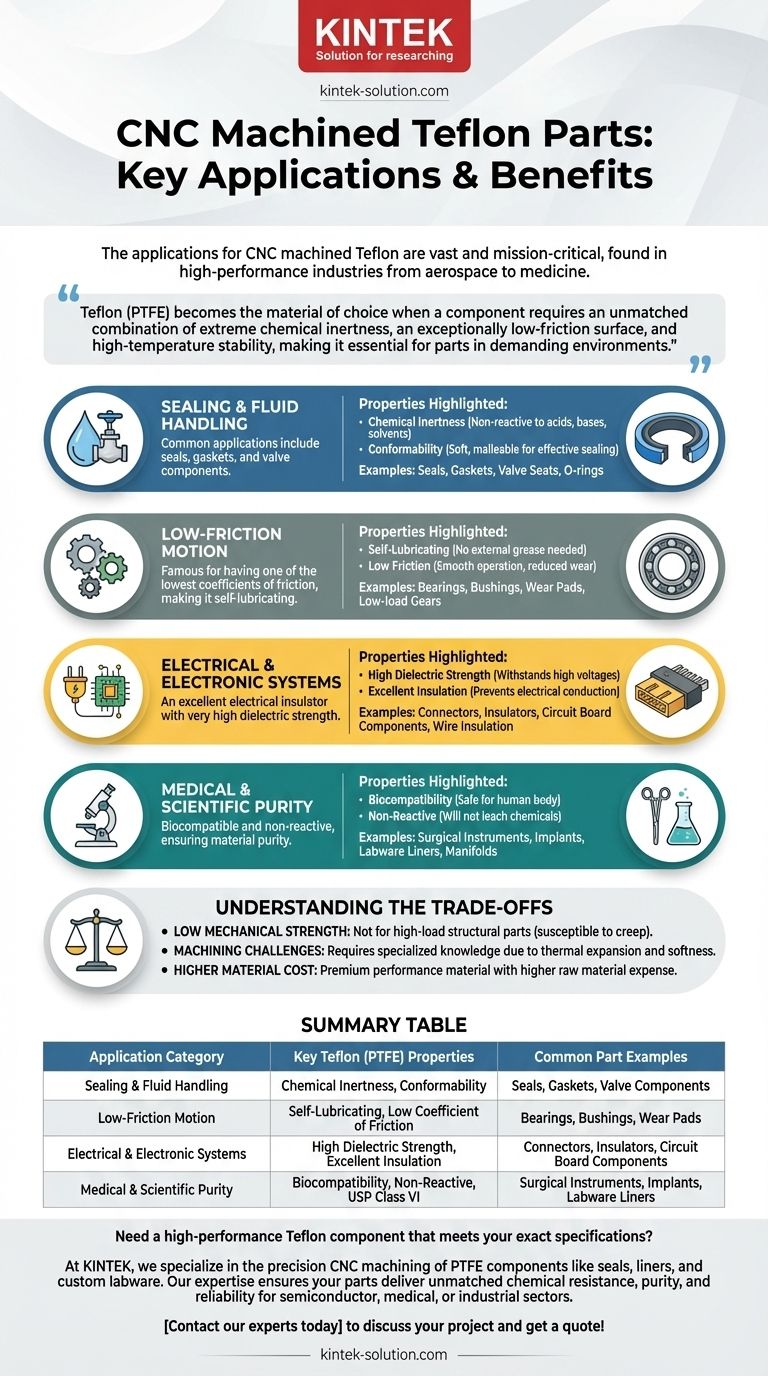
Seals, gaskets, and valve components are among the most common applications for machined Teflon. Its value here comes from two primary characteristics.
First, Teflon is almost completely chemically inert. It will not react with or degrade when exposed to the most aggressive acids, bases, and solvents, making it essential for chemical processing and laboratory equipment.
Second, it is a relatively soft and malleable material. This allows it to conform to mating surfaces under pressure, creating a highly effective and durable seal.
For Low-Friction Motion
Teflon is famous for having one of the lowest coefficients of friction of any solid material. This makes it a self-lubricating surface.
This property is leveraged in parts like bearings, bushings, wear pads, and even some low-load gears. These components can operate smoothly without the need for external grease or oil, which is critical in clean environments like food processing or in applications where maintenance is difficult.
For Electrical and Electronic Systems
Teflon is an excellent electrical insulator with a very high dielectric strength. It does not conduct electricity and can withstand high voltages.
This makes it the go-to material for high-performance insulators, connectors, and circuit board components, especially in aerospace and high-frequency electronics where signal integrity and reliability are paramount.
For Medical and Scientific Purity
In the medical and food industries, material purity is non-negotiable. Teflon is both biocompatible and non-reactive.
It will not cause adverse reactions when used inside the human body, making it suitable for surgical instruments and implants. In food processing or scientific labs, its inert nature ensures that it will not leach chemicals or contaminate the products it touches, making it ideal for liners, manifolds, and testing equipment.
Understanding the Trade-offs
While powerful, Teflon is not a universal solution. An objective assessment requires acknowledging its limitations.
Low Mechanical Strength
Teflon is a relatively soft material compared to other engineering plastics like PEEK or metals. It is not suitable for high-load structural components.
It is also susceptible to "creep," meaning it can slowly deform over time when under a constant load. This must be accounted for in the design of parts like seals and bearings.
Machining Challenges
Although it is soft, machining Teflon to very tight tolerances requires specialized knowledge. Its high rate of thermal expansion can cause it to change size during machining if heat is not managed properly.
Furthermore, its softness means it can be difficult to clamp securely without deforming the workpiece, requiring specific fixtures and machining strategies.
Higher Material Cost
Teflon is a premium performance material. Its raw material cost is significantly higher than that of more common plastics like Delrin (Acetal) or Nylon. This cost is justified by its unique performance in harsh environments where other materials would quickly fail.
Making the Right Choice for Your Component
To decide if CNC machined Teflon is the correct material for your project, consider your primary performance driver.
- If your primary focus is chemical resistance and purity: Teflon is an unparalleled choice for components exposed to aggressive chemicals or in medical and food-grade applications.
- If your primary focus is a low-friction, self-lubricating surface: Teflon is ideal for bearings, bushings, and wear pads where external lubrication is undesirable or impossible.
- If your primary focus is high-performance electrical insulation: Its excellent dielectric properties make it a default material for critical insulators, connectors, and high-frequency electronics.
- If your primary focus is high structural strength and rigidity: You should immediately consider alternative materials like PEEK, Delrin, or metal, as Teflon is too soft for significant load-bearing roles.
Ultimately, choosing Teflon is a decision to prioritize performance and reliability in environments where other materials would fail.
Summary Table:
| Application Category | Key Teflon (PTFE) Properties | Common Part Examples |
|---|---|---|
| Sealing & Fluid Handling | Chemical Inertness, Conformability | Seals, Gaskets, Valve Components |
| Low-Friction Motion | Self-Lubricating, Low Coefficient of Friction | Bearings, Bushings, Wear Pads |
| Electrical & Electronic Systems | High Dielectric Strength, Excellent Insulation | Connectors, Insulators, Circuit Board Components |
| Medical & Scientific Purity | Biocompatibility, Non-Reactive, USP Class VI | Surgical Instruments, Implants, Labware Liners |
Need a high-performance Teflon component that meets your exact specifications?
At KINTEK, we specialize in the precision CNC machining of PTFE components like seals, liners, and custom labware. Our expertise ensures your parts deliver unmatched chemical resistance, purity, and reliability—exactly what your application in the semiconductor, medical, or industrial sector demands.
We provide custom fabrication from prototypes to high-volume orders, guaranteeing the quality and performance you need.
Contact our experts today to discuss your project and get a quote!
Visual Guide
Related Products
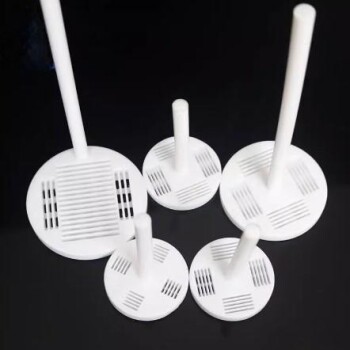
- Custom Machined Molded PTFE Teflon Parts Manufacturer for Laboratory ITO FTO Conductive Glass Cleaning Flower Basket
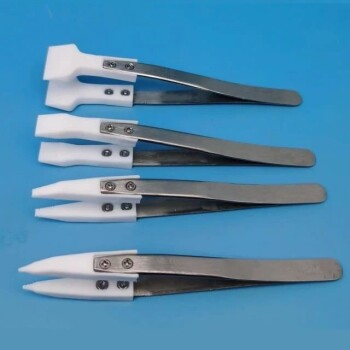
- Custom PTFE Parts Manufacturer for Teflon Parts and PTFE Tweezers
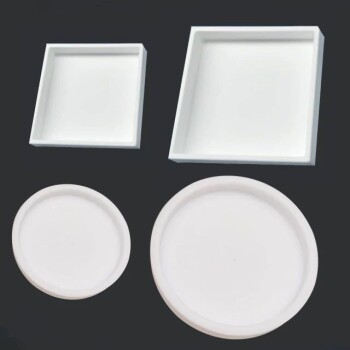
- Custom PTFE Parts Manufacturer for Teflon Containers and Components
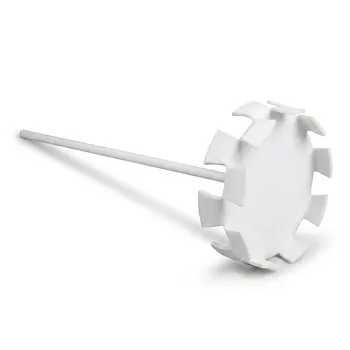
- PTFE Dispersion Disk Food Cosmetic Grade Non Stick Corrosion Resistant Large Stirring Paddle Customizable Impeller
- Customizable PTFE Rods for Advanced Industrial Applications
People Also Ask
- What advantages do PTFE flower baskets provide for the photovoltaic and solar energy industry? Boost Cell Efficiency
- What is the primary function and application of a PTFE flower basket? Expert Guide to High-Purity Processing
- What are the primary functions and design features of a PTFE flower basket? Optimize High-Purity Chemical Processing
- What is the working principle of a PTFE flower basket? Optimize Fluid Flow and Purity for Chemical Immersion
- How does the structural design of a PTFE flower basket ensure uniform fluid access to substrates? Optimize Lab Yields