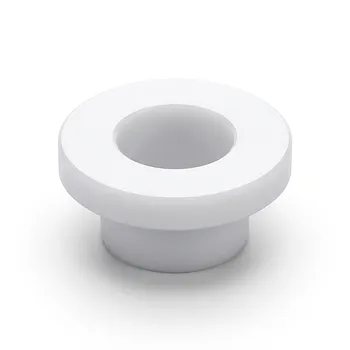
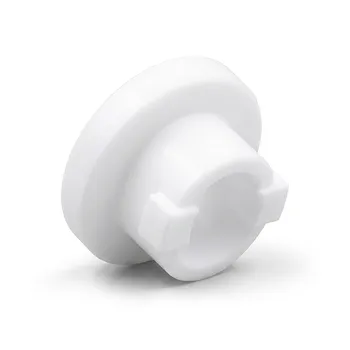
In short, PTFE bushings are suitable for any application that requires self-lubrication, chemical resistance, and performance across a wide range of temperatures. Their unique properties make them a definitive choice in industries ranging from automotive and aerospace to food processing and pharmaceutical manufacturing, where traditional lubricated metal bearings would fail or cause contamination.
The core principle is not about which industry uses PTFE, but about which operating conditions demand it. PTFE bushings solve problems in environments characterized by corrosive chemicals, extreme heat or cold, and the need for clean, maintenance-free sliding motion.
The Core Properties Driving PTFE Suitability
The versatility of Polytetrafluoroethylene (PTFE) stems from a unique combination of material properties. Understanding these characteristics is key to identifying the applications where it will not just work, but excel.
Unmatched Self-Lubrication
PTFE has one of the lowest coefficients of friction of any solid material. This property is often described as self-lubricating.
This means components can slide against each other with minimal resistance without requiring external grease or oil. This is critical for applications in textile machinery or food production where contamination is unacceptable.
Extreme Chemical Inertness
PTFE is highly resistant to nearly all common chemicals, acids, and solvents. It simply does not react with them.
This makes it the ideal material for components in chemical processing equipment, hose linings for aggressive fluids, and pharmaceutical manufacturing machinery where material integrity is paramount.
Exceptional Thermal Stability
PTFE retains its structural integrity and performance characteristics across an incredibly wide temperature range, from -200°C to +260°C (-328°F to +500°F).
This thermal stability makes it a reliable choice for demanding automotive components near engines, aerospace systems exposed to extreme temperatures, and industrial machinery operating in high-heat environments.
Superior Electrical Insulation
PTFE is an excellent electrical insulator, meaning it does not conduct electricity. It can withstand high voltages without breaking down.
This property is essential for components in electrical systems and electronics, where it is used for insulation, gaskets, and seals to prevent short circuits and ensure safety.
Understanding the Trade-offs
While its properties are exceptional, PTFE is not universally superior to all other materials. Acknowledging its limitations is crucial for proper application design.
Lower Mechanical Strength
Compared to metal bushings (like bronze or steel), PTFE is a much softer material. It has high compressibility and can deform under very high static loads.
In applications involving extreme pressure or high impact forces, a metal-backed or composite bushing may be a more suitable choice to provide the necessary structural support.
Susceptibility to Creep
Creep is the tendency of a solid material to deform permanently under the influence of persistent mechanical stress.
While PTFE has good creep resistance for a thermoplastic, it can still deform slightly over long periods under a constant load, especially at elevated temperatures. This must be factored into designs requiring extremely tight, long-term tolerances.
Making the Right Choice for Your Application
Selecting the right bushing material requires aligning the material's strengths with the primary demands of the application.
- If your primary focus is low-maintenance, clean operation: PTFE is ideal due to its self-lubricating properties, which eliminate the need for external grease or oil.
- If your primary focus is performance in corrosive environments: PTFE's unparalleled chemical inertness makes it the superior choice for equipment handling acids or other aggressive substances.
- If your primary focus is reliability across extreme temperatures: PTFE's vast operating range ensures consistent, predictable performance where other plastics would melt or become brittle.
- If your primary focus is high-load mechanical strength: You should carefully evaluate if a pure PTFE bushing is sufficient, or if a composite or metal-backed bushing is required for support.
Ultimately, selecting a PTFE bushing is a decision to prioritize chemical, thermal, and frictional resilience in demanding operational environments.
Summary Table:
| Key Property | Benefit | Ideal Application |
|---|---|---|
| Self-Lubrication | Maintenance-free, contamination-free sliding motion | Food processing, textile machinery |
| Chemical Inertness | Resists acids, solvents, and aggressive chemicals | Chemical processing, pharmaceutical equipment |
| Thermal Stability | Performs from -200°C to +260°C | Automotive, aerospace, high-temperature industrial |
| Electrical Insulation | Prevents short circuits, ensures safety | Electrical systems, electronics |
Need a PTFE bushing that can handle your specific chemical, thermal, or friction challenges?
At KINTEK, we specialize in manufacturing high-precision PTFE components, including custom bushings, seals, and liners for the semiconductor, medical, laboratory, and industrial sectors. Whether you need a prototype or a high-volume order, our expertise in PTFE fabrication ensures you get a component that delivers reliable performance in the most demanding environments.
Contact us today to discuss your application requirements and get a custom solution tailored to your needs.
Visual Guide

Related Products
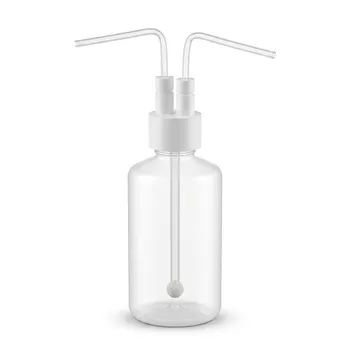
- Custom PTFE Gas Washing Bottle Cap Multi Port Reaction Lid Corrosion Resistant High Sealing Laboratory Fluoropolymer Closure
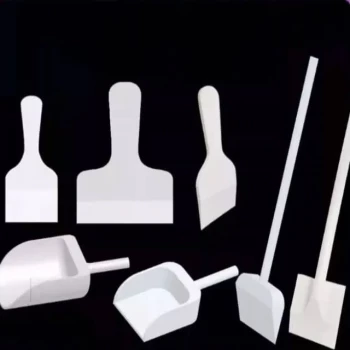
- Customizable PTFE Scrapers and Shovels for Demanding Applications
- High Corrosion Resistant PTFE Faucet Polytetrafluoroethylene Valve for Chemical Storage Drums and Fluid Transfer Systems Customizable Industrial Grade
- Custom PTFE Laboratory Cleaning Basket Carrier High Purity Acid Base Resistant Wafer Holder Low Background Contamination Free Chemical Bath Rack
- PTFE Anti Scald Heat Insulation Sleeve Hot Plate Support Feet Laboratory Benchtop Protection Customizable Thermal Barrier
People Also Ask
- What material grades are available for PTFE caps? Choose the Right Grade for Purity or Performance
- What are the electrical insulation properties of PTFE caps? Superior Dielectric Performance for Demanding Applications
- What are the specialized types of PTFE caps and their uses? Ensure Sample Integrity and Safety
- What are the advantages of PTFE lids for jacketed and process vessels? Achieve Superior Durability & Chemical Resistance
- What are the reusability and durability characteristics of PTFE-lined bottle caps? Engineered for Repeated, Reliable Use