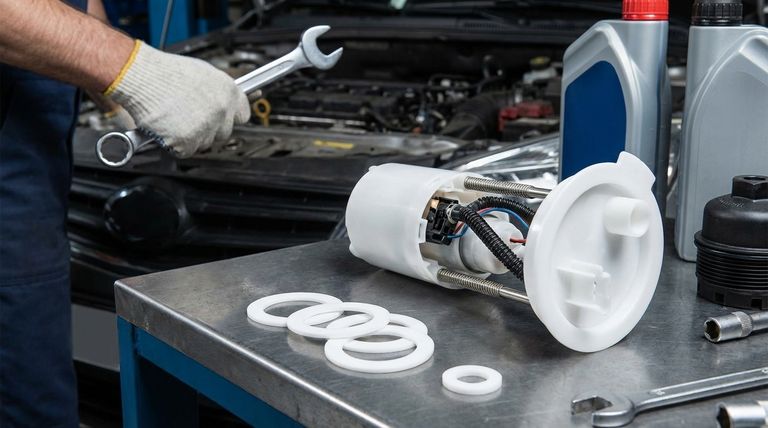
In the automotive industry, PTFE Teflon washers are primarily used as high-performance gaskets and seals in critical systems like fuel pumps and oil filters. Their unique ability to resist extreme heat from engine combustion and degradation from corrosive fuels and lubricants makes them essential for creating durable, leak-proof seals where standard materials would quickly fail.
The core reason PTFE is so prevalent in automotive applications is its unparalleled combination of properties. It simultaneously solves three major engineering challenges: sealing against aggressive chemicals, withstanding extreme temperatures, and reducing friction between moving parts.
The Core Problem: A Hostile Automotive Environment
To understand why PTFE is chosen, you must first appreciate the incredibly harsh conditions inside a modern vehicle. Standard materials often cannot withstand the combination of stressors present.
Extreme Heat
The combustion process and surrounding engine components generate intense heat. Materials in these areas must maintain their structural integrity and sealing capability without melting, warping, or becoming brittle.
Corrosive Fluids
Gasoline, diesel fuel, engine oil, and various lubricants contain chemicals that can aggressively break down plastics and elastomers. A component must be chemically inert to prevent degradation and ensure a long service life.
Constant Vibration and Friction
An engine is a source of constant vibration, which can wear down components and loosen seals over time. In moving parts, such as in braking systems, minimizing friction is critical to reduce wear and improve efficiency.
How PTFE Solves These Challenges
PTFE's molecular structure gives it a unique set of properties that directly counter the harsh conditions found in vehicles. This makes it an ideal problem-solving material for automotive engineers.
Unmatched Temperature Stability
PTFE washers maintain their form and function across a wide temperature range, easily handling the high heat generated by an engine. This stability ensures that seals remain tight and effective, preventing critical fluid leaks.
Superior Chemical Resistance
PTFE is one of the most non-reactive materials known. It does not degrade when exposed to corrosive automotive fluids, making it perfect for gaskets in fuel pumps, oil filters, and as a liner for fuel hoses.
Extremely Low Friction Coefficient
PTFE has one of the lowest coefficients of friction of any solid material, often compared to wet ice on wet ice. This property is leveraged in guide strips and wear pads within engines and braking systems to minimize energy loss and component wear.
Vibration Dampening
When placed between two metal surfaces, the relative softness of a PTFE washer helps to absorb and dampen vibrations. This reduces noise, improves component lifespan, and prevents parts from loosening over time.
Understanding the Trade-offs
While PTFE is a superior material for many applications, it's not a universal solution. Acknowledging its limitations is key to using it effectively.
Limited Mechanical Strength
Compared to metals, PTFE is a relatively soft material. Under very high pressure or load, it can be susceptible to "creep," where the material slowly deforms. This must be considered in the design of the joint or assembly.
Higher Thermal Expansion
PTFE expands and contracts with temperature changes more than the metal parts it's often seated between. Engineers must account for this differential expansion to ensure a seal remains effective from a cold start to peak operating temperature.
Cost Considerations
PTFE is a premium performance material and is generally more expensive than common elastomers like rubber or nitrile. Its use is justified in applications where those less expensive materials would fail due to heat, chemical exposure, or friction.
Making the Right Choice for Your Application
Selecting the right material depends entirely on the specific demands of the component's environment.
- If your primary focus is sealing corrosive fluids at high temperatures: PTFE washers are the definitive choice for applications like fuel and oil systems where chemical inertness and heat resistance are paramount.
- If your primary focus is reducing friction and wear between moving parts: PTFE's low-friction nature makes it ideal for wear pads, guide strips, and other components where minimizing energy loss is critical.
- If your primary focus is a simple, cost-sensitive seal in a low-temperature, non-corrosive environment: A standard rubber or elastomer washer is likely a more appropriate and economical choice.
Ultimately, understanding PTFE's distinct advantages allows engineers to design more efficient, durable, and reliable automotive systems.
Summary Table:
| Automotive Challenge | How PTFE Washers Solve It | Common Applications |
|---|---|---|
| Extreme Heat | Maintains integrity from cold starts to peak engine temperatures. | Engine gaskets, exhaust components. |
| Corrosive Fluids | Chemically inert against fuels, oils, and lubricants. | Fuel pump seals, oil filter gaskets, fuel hose liners. |
| Vibration & Friction | Dampens vibration and has an extremely low coefficient of friction. | Braking system wear pads, engine guide strips. |
Need a reliable sealing solution for your automotive components?
At KINTEK, we specialize in manufacturing high-precision PTFE components, including custom washers and seals, for the demanding environments of the automotive industry. Our expertise ensures your parts will withstand extreme heat, corrosive chemicals, and constant vibration.
We offer custom fabrication from prototypes to high-volume orders, guaranteeing the performance and durability your designs require.
Contact KINTEK today to discuss your specific application and get a quote!
Visual Guide

Related Products
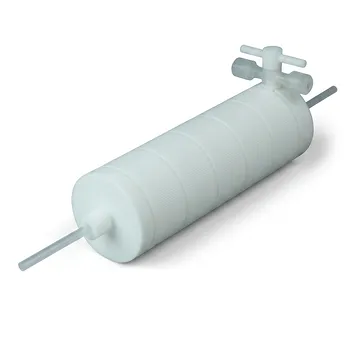
- Custom PTFE Gas Washing Bottle Corrosion Resistant Chemical Absorption Vessel with Quarter Inch Tubing Connections
- Customizable PTFE Scrapers and Shovels for Demanding Applications
- Custom Machined Molded PTFE Teflon Parts Manufacturer for Laboratory ITO FTO Conductive Glass Cleaning Flower Basket
- PTFE PFA Vacuum Filtration System Corrosion Resistant Customizable Shatterproof Laboratory Device
- Custom PTFE Gas Washing Bottle Corrosion Resistant Low Background Fluoropolymer Gas Absorption Vessel
People Also Ask
- Can PTFE washers be customized for specific needs? Achieve Perfect Fit and Functionality
- What are the key reasons to choose PTFE washers? Unmatched Performance in Demanding Environments
- What are PTFE washers made of? Unlocking the Power of Carbon-Fluorine Chemistry
- Why are non-stick properties important in PTFE washers? Prevent Adhesion and Ensure Reliability
- How do PTFE washers perform in extreme temperature conditions? Unmatched Stability from -200°C to 260°C