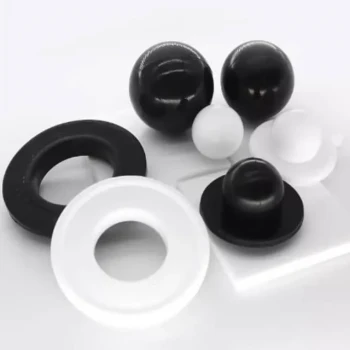
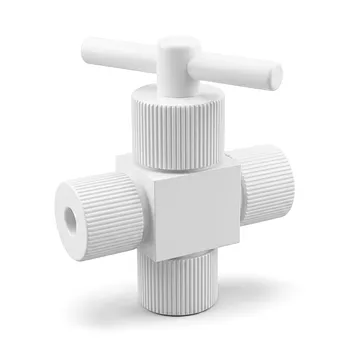
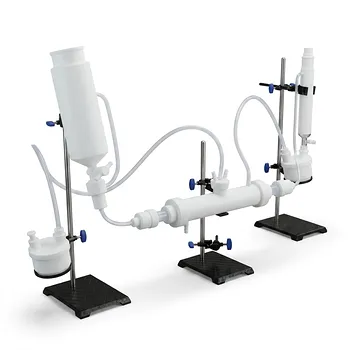
At its core, PTFE (Polytetrafluoroethylene) gaskets and O-rings are used in industrial and marine operations as high-performance seals for critical equipment. They are chosen for their unique ability to create a reliable, leak-proof barrier in environments where other materials would quickly fail due to chemical corrosion, extreme temperatures, or constant wear. Their use spans from chemical processing plants and pharmaceutical labs to marine piping systems and heavy machinery.
The decision to use PTFE is fundamentally a decision for operational reliability. Its unparalleled resistance to chemicals and temperature extremes ensures system integrity, minimizes costly downtime, and enhances safety in the most demanding industrial settings.
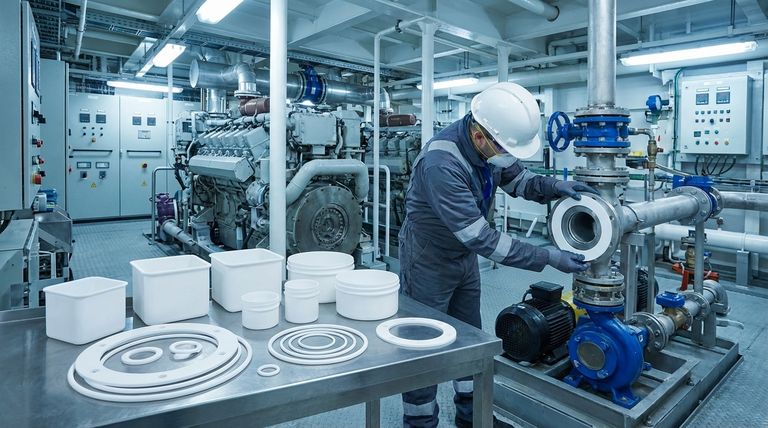
The Role of PTFE in Demanding Environments
The value of PTFE in gaskets and O-rings comes from a specific set of material properties that make it uniquely suited for harsh operational conditions. Understanding these properties explains why it has become a standard in so many critical industries.
Unmatched Chemical Inertness
PTFE is famously non-reactive. It can withstand exposure to a vast range of aggressive and corrosive substances, including strong acids, bases, and solvents, without degrading.
This makes it essential for the chemical, petrochemical, and pharmaceutical industries, where it is used to seal flanges, pumps, and valves that handle reactive or toxic fluids.
Extreme Temperature Stability
PTFE seals maintain their integrity and sealing capability across a wide temperature spectrum. This stability is crucial for equipment that experiences significant thermal cycling.
Applications like compressors and electric motors benefit from PTFE's ability to resist both high temperatures and surface wear, ensuring a long and reliable service life.
Superior Durability and Longevity
Gaskets and O-rings made from PTFE are highly resistant to wear and degradation, even under continuous use. This durability translates directly into a longer product life.
A longer lifespan means fewer replacements are needed, which significantly reduces maintenance costs and minimizes operational downtime for asset owners.
Key Applications Across Industries
PTFE's robust properties have led to its adoption in a wide array of critical applications where seal failure is not an option.
Chemical and Petrochemical Processing
In this sector, PTFE gaskets are the default choice for sealing piping systems, flanges, and valves. They provide tight, leak-proof connections that prevent the escape of hazardous materials.
They are also used in highly demanding systems like toxic gas containment and underground storage tanks, where extreme leakage protection is a top priority.
Pharmaceutical and Food Production
The purity of processes in these industries requires materials that will not contaminate the product. PTFE's inertness makes it ideal for these sanitary applications.
PTFE tri-clamp gaskets are standard for ensuring leak-proof, hygienic connections in piping systems used for food, beverage, and pharmaceutical manufacturing. It's also used in lab equipment like HPLC and GC systems.
Heavy Machinery and Equipment
PTFE seals protect the internal components of various types of machinery. Their resistance to heat, corrosion, and wear is vital for performance and reliability.
They are commonly found in electric motors, compressors, and pumps, where they provide a durable barrier against contaminants and fluid leaks.
Marine and Inspection Equipment
In marine environments, equipment is constantly exposed to saltwater, fuels, and chemicals. PTFE's corrosion resistance makes it an excellent choice for sealing various onboard systems.
It is also a preferred material for seals on sight glasses and level gauges, as it maintains performance and clarity over time despite exposure to harsh industrial fluids.
Understanding the Trade-offs
While PTFE is an exceptional material, no single solution is perfect for every scenario. Acknowledging its limitations is key to using it effectively.
Susceptibility to Creep
PTFE is a relatively soft material and can be prone to "creep" or "cold flow," where it slowly deforms over time under a constant load. This is a critical consideration in high-pressure flange applications.
Proper installation and torque specifications are essential to mitigate this. In some cases, filled PTFE grades (mixed with materials like glass or carbon) are used to improve creep resistance.
Lower Mechanical Strength
Compared to metals or harder plastics, PTFE has lower tensile strength and abrasion resistance. It is not suitable for dynamic sealing applications involving high friction or sharp surfaces without reinforcement.
Installation Sensitivity
The performance of a PTFE gasket is highly dependent on proper installation. Over-tightening a flange can crush the gasket, while under-tightening can lead to leaks.
Ensuring that technicians follow precise bolting patterns and torque values is crucial for achieving a reliable, long-lasting seal.
Making the Right Choice for Your Operation
Selecting the right sealing material is a critical engineering decision that impacts safety, cost, and efficiency. PTFE offers a powerful solution when used for the correct application.
- If your primary focus is containing corrosive or toxic chemicals: PTFE's unmatched chemical inertness makes it the safest and most reliable choice for sealing flanges, valves, and pumps.
- If your primary focus is minimizing long-term maintenance costs: The exceptional durability and long service life of PTFE reduce the frequency of replacement, directly lowering labor costs and operational downtime.
- If your primary focus is reliability in extreme temperatures: PTFE's ability to perform consistently in both high and low-temperature environments makes it ideal for critical machinery like compressors and process equipment.
Ultimately, specifying PTFE for gaskets and O-rings is a strategic investment in the long-term integrity and efficiency of your operation.
Summary Table:
| Key Property | Benefit for Industrial/Marine Operations |
|---|---|
| Chemical Inertness | Withstands corrosive acids, bases, and solvents; ideal for chemical processing and pharmaceutical applications. |
| Temperature Stability | Maintains integrity from extreme cold to high heat; suitable for compressors, motors, and thermal cycling equipment. |
| Durability & Longevity | Reduces maintenance costs and downtime by resisting wear and degradation over time. |
| Applications | Used in flanges, valves, pumps, sight glasses, and sanitary piping systems across various industries. |
Upgrade your sealing solutions with KINTEK's precision PTFE components.
As a leading manufacturer of high-performance PTFE seals, gaskets, liners, and labware, we understand the critical role reliable sealing plays in your operations. Whether you're in the semiconductor, medical, laboratory, or industrial sector, our custom-fabricated PTFE components are engineered to withstand the harshest conditions—ensuring leak-proof performance, chemical resistance, and long-term durability.
From prototypes to high-volume orders, we prioritize precision production to meet your exact specifications. Let us help you enhance safety, reduce downtime, and optimize efficiency.
Contact us today to discuss your specific sealing challenges and receive a customized solution!
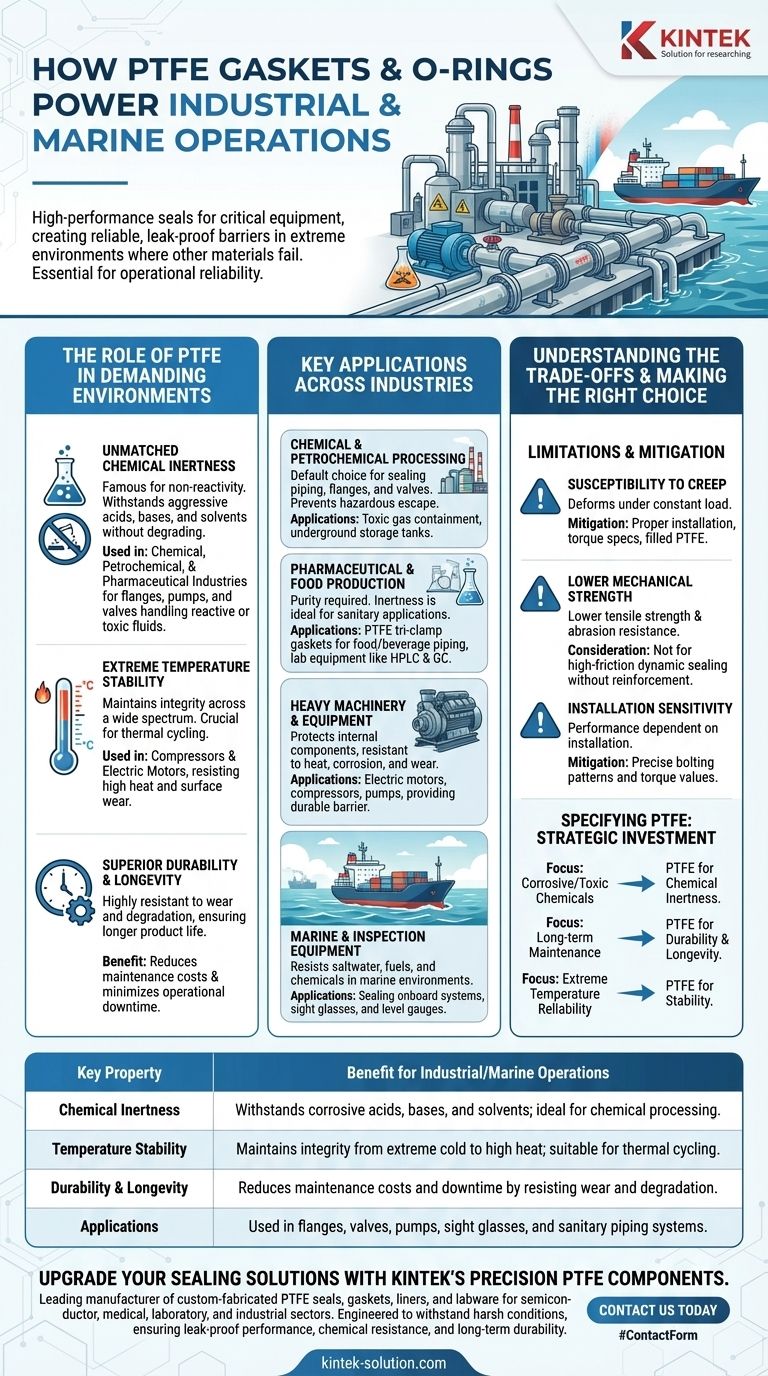
Visual Guide
Related Products
- Custom PTFE Insulating Gaskets and Corrosion Resistant Fluoropolymer Seals for Industrial Electrical Applications
- Customizable High Temperature Resistant Anti Static PTFE Insulating Gaskets Flame Retardant Corrosion Proof Industrial Seals
- Custom PTFE Insulating Gaskets Corrosion Resistant Teflon Seals Tailored Engineering Plastic Components
- Customizable PTFE Rods for Advanced Industrial Applications
- Custom PTFE Sleeves and Hollow Rods for Advanced Applications
People Also Ask
- What are the three primary types of PTFE available for gaskets and seals? Choose the Right Material for Your Application
- Why is PTFE an ideal material choice for sealing gaskets, valves, and fluid transfer tubing exposed to extremely aggressive chemicals? Discover Its Superior Chemical Resistance and Reliability
- How is PTFE utilized in seals and gaskets? Leverage Its Chemical & Temperature Resistance
- What are the key properties of PTFE that make it suitable for seals and gaskets? Unlock Superior Sealing Performance
- How are custom PTFE parts used in the automotive sector? Enhance Vehicle Performance & Durability