The Elegant Brutalism of Simplicity
In engineering, as in nature, the most robust solutions are often born from radical simplicity. We tend to admire complexity, but resilience is rarely found there.
Consider Polytetrafluoroethylene, or PTFE.
Its name is a mouthful, but its design is the epitome of molecular minimalism. It consists of just two elements: a long chain of carbon atoms, each one completely shielded by two fluorine atoms.
This simple architecture, a carbon backbone protected by a fluorine fortress, is the source of its legendary powers. It’s not just a material; it’s a masterclass in how a single, powerful chemical bond can solve a universe of complex problems.
The Molecular Blueprint
To understand why PTFE behaves the way it does, you must visualize its structure not as a formula, (CF₂)n, but as a piece of microscopic architecture.
The Carbon Backbone: A Stable Foundation
At its core is a long, stable chain of carbon atoms. This is the polymer's skeleton, providing structure. In many other plastics, this backbone is vulnerable, a target for chemical attack.
The Fluorine Fortress: An Impenetrable Shield
What makes PTFE extraordinary is its armor. Each carbon atom is bonded to two fluorine atoms. Fluorine is a large, highly electronegative atom that forms a dense, seamless sheath around the entire carbon backbone.
This is not just a coating; it's an integral, impenetrable fortress.
The Carbon-Fluorine Bond: The Source of Strength
The single most important feature is the bond connecting the fortress to the backbone. The carbon-fluorine (C-F) bond is one of the strongest single bonds in organic chemistry. It requires immense energy to break, making the entire structure exceptionally stable.
From Architecture to Action: Emergent Properties
This elegant molecular design has profound real-world consequences. The properties of PTFE are not a list of separate features; they are the direct, cascading results of its C-F bond and fluorine shield.
Consequence 1: A Chemically Indifferent Surface
Imagine the inside of a semiconductor etching tool. Volatile, hyper-corrosive acids are used to carve microscopic circuits onto silicon wafers. A single unwanted reaction, a single microscopic particle shed from a seal, can ruin a multi-million dollar batch.
The fluorine fortress of PTFE makes it almost completely inert. The shield prevents corrosive chemicals from ever reaching the vulnerable carbon backbone. This is why PTFE is not just a good choice for seals, gaskets, and liners in these environments—it’s often the only choice.
Consequence 2: The Physics of "Non-Stick"
The psychological reason we find things "sticky" is that their molecules have something to grab onto. The surface of PTFE, composed entirely of tightly-bonded fluorine atoms, offers virtually nothing for other molecules to latch onto.
This extremely low surface energy is the principle behind its non-stick behavior. It doesn’t just repel water and oil (hydrophobicity); it fundamentally refuses to interact with most other substances.
Consequence 3: Resilience Under Fire (and Ice)
That same C-F bond strength that ensures chemical inertness also provides incredible thermal stability. It takes a tremendous amount of heat energy to vibrate these bonds to their breaking point, giving PTFE a high melting point and a wide operating temperature range.
The Engineer's Dilemma: Acknowledging the Trade-offs
No material is a panacea. The very simplicity that gives PTFE its chemical superpowers also creates physical limitations. This is the crucial trade-off every engineer must navigate.
- Mechanical Softness: In its pure form, PTFE is a relatively soft material. It is prone to "creep"—slow deformation under a constant load—and has poor abrasion resistance. Its chemical strength does not directly translate to structural might.
- Processing Challenges: PTFE’s high melting point and viscosity mean it can't be melted and molded like common plastics. It requires specialized processes like compression molding and sintering, which demand expertise and precision control.
These trade-offs mean that simply choosing PTFE is not enough. The success of a component depends on selecting the right grade (pure vs. filled) and fabricating it with an expert understanding of its unique behavior.
Application by Design, Not by Default
Understanding this deep chemistry transforms how we select materials. It moves from a box-ticking exercise to a strategic design choice.
| Application Demand | Why PTFE's Chemistry is the Solution |
|---|---|
| Absolute Purity & Non-Reactivity | In semiconductor, medical, and lab environments, the fluorine fortress guarantees components like seals and liners will not leach, react, or contaminate critical processes. |
| Effortless Motion & Low Friction | For high-performance bearings or non-stick labware, the low-energy fluorine surface provides a durable, built-in lubricity that other materials can't match. |
| Hostile Environments | In industrial chemical processing, where a component must withstand both corrosive agents and temperature extremes, PTFE’s stable C-F bonds provide unmatched resilience. |
The genius of PTFE lies in its brutal simplicity. It's a testament to how mastering a single, fundamental principle—the strength of the carbon-fluorine bond—can yield a material that solves some of modern industry's most demanding challenges. Translating this molecular potential into reliable, high-performance components requires deep material science expertise and precision manufacturing.
If your application demands the uncompromising performance that only PTFE can offer, Contact Our Experts
Visual Guide

Related Products
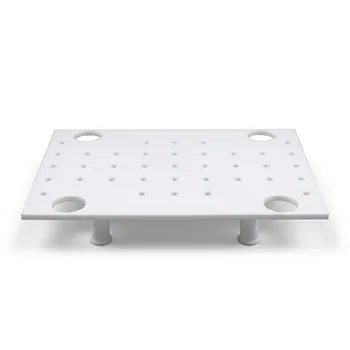
- Custom PTFE Filtration System Acid Resistant High Purity Semiconductor Grade Chemical Processing Filter
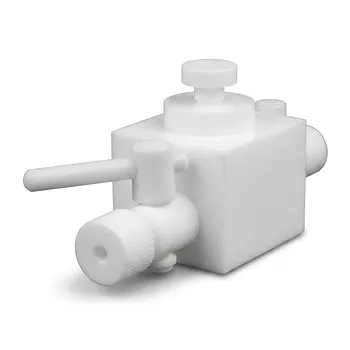
- High Corrosion Resistant PTFE Faucet Polytetrafluoroethylene Valve for Chemical Storage Drums and Fluid Transfer Systems Customizable Industrial Grade
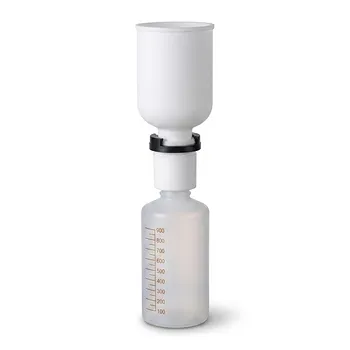
- PTFE PFA Vacuum Filtration System Corrosion Resistant Customizable Shatterproof Laboratory Device
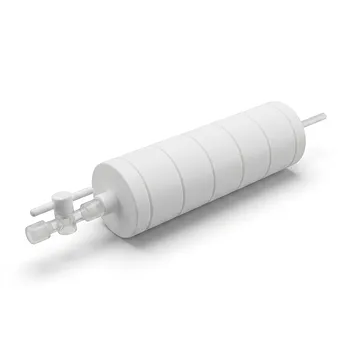
- PTFE Corrosion Resistant Filter with PFA Valve Connections and Integrated Sieve Plate
- High Temperature Chemical Resistant 50ml PTFE Syringe Customized Teflon Injector with Threaded Seal for Trace Analysis
Related Articles
- The Physics of a Perfect Fit: How PTFE Eliminates an Athlete's Hidden Distractions
- The Invisible Threat: Why Material Inertness Defines Success in Ultra-Pure Systems
- The Engineer's Dilemma: Navigating the Trade-offs Between PTFE and Its Alternatives
- The Hidden Risk of PTFE: Why Your Go-To Material Is Now a Liability—And What to Do About It
- The Unseen Workhorse: Why PTFE Is the Default Choice for Impossible Problems