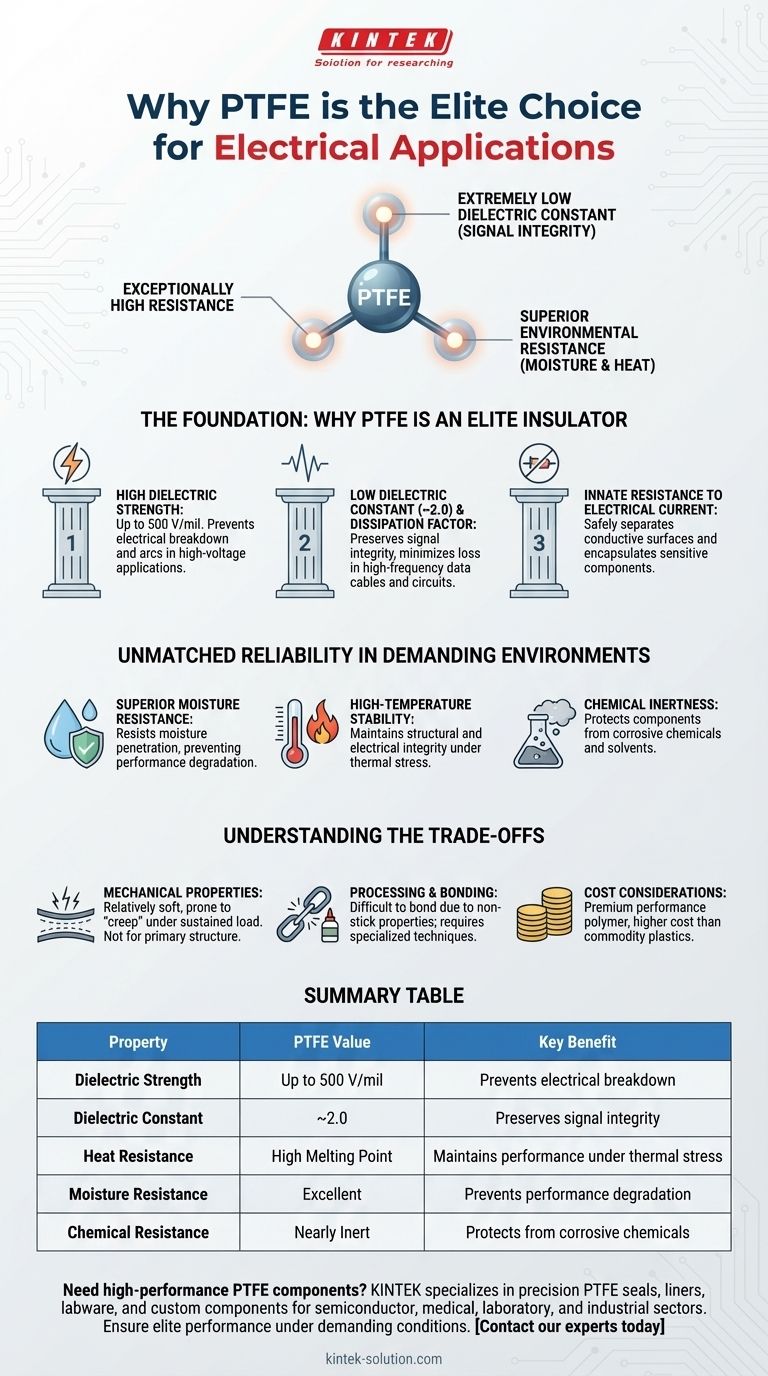
At its core, Polytetrafluoroethylene (PTFE) is suitable for electrical applications because it combines three critical properties: exceptionally high electrical resistance, an extremely low dielectric constant that preserves signal integrity, and superior resistance to environmental factors like moisture and heat. This unique combination ensures its insulating qualities do not degrade over time, making it far more reliable than common plastics like PVC or nylon.
While many materials can insulate electricity, PTFE's primary value is its ability to maintain elite electrical performance under conditions that would cause other insulators to fail. Its molecular structure provides a stable foundation for reliability in the most demanding electronic systems.
The Foundation: Why PTFE is an Elite Insulator
PTFE's suitability begins at the molecular level. Its highly symmetric macromolecular structure is the source of its exceptional electrical properties, setting it apart from other polymers.
Exceptionally High Dielectric Strength
Dielectric strength is a material's ability to withstand a strong electric field without breaking down and conducting electricity.
PTFE is one of the best insulators known, capable of insulating up to 500 volts per mil (a mil is one-thousandth of an inch). This makes it ideal for preventing shorts and arcs in high-voltage applications.
Low Dielectric Constant and Dissipation Factor
The dielectric constant measures a material's ability to store electrical energy. A low value is critical for high-frequency applications, as it minimizes signal loss and interference.
PTFE has a very low dielectric constant of 2.0. This property ensures that the integrity of signals traveling through data cables or across circuit boards is preserved, which is essential for reliable performance.
Innate Resistance to Electrical Current
Fundamentally, an insulator's job is to block the flow of electrical current.
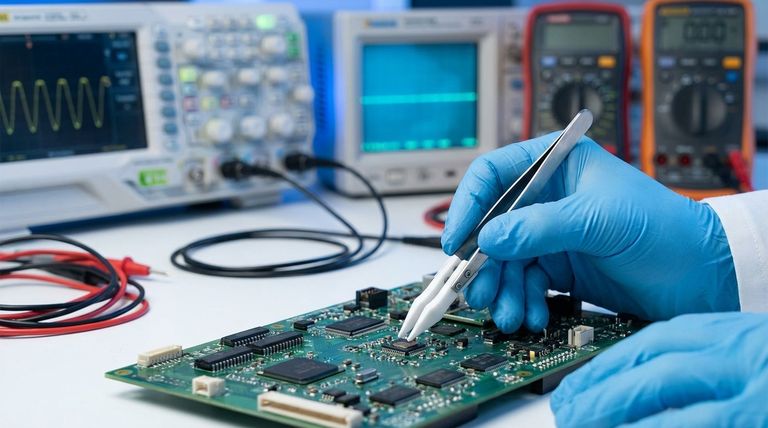
PTFE's high resistance to electrical currents makes it a safe and reliable choice for separating conductive surfaces, such as in capacitors, or for encapsulating sensitive electronic components.
Unmatched Reliability in Demanding Environments
An insulator is only as good as its ability to perform in the real world. PTFE's physical resilience ensures its electrical properties remain stable over the long term, even when exposed to harsh conditions.
Superior Moisture Resistance
Moisture is a primary cause of electrical insulation failure in many plastics.
PTFE resists moisture penetration far better than most polymers. This prevents a gradual decline in insulating performance, a common issue for materials like nylon in humid environments.
High-Temperature Stability
Electrical components often generate significant heat, which can degrade or melt standard insulators.
PTFE has a high melting temperature and maintains its structural and electrical integrity under thermal stress, ensuring consistent performance in high-temperature operating conditions.
Chemical Inertness
In many industrial settings, components may be exposed to corrosive chemicals or solvents.
PTFE is almost completely chemically inert. This property protects the insulated component, guaranteeing that its electrical performance is not compromised by chemical attack.
Understanding the Trade-offs
No material is perfect for every situation. While PTFE's electrical and chemical properties are world-class, it is essential to understand its limitations to make an informed decision.
Mechanical Properties
PTFE is a relatively soft material and can be prone to "creep," or slow deformation under a sustained load. It is not intended for use as a primary structural component.
Processing and Bonding
The same non-stick properties that make PTFE famous also make it very difficult to bond with adhesives. Joining PTFE components often requires specialized techniques like chemical etching.
Cost Considerations
PTFE is a premium performance polymer. It is significantly more expensive than commodity plastics like PVC or polyethylene, making it best suited for applications where its specific advantages are a necessity.
Making the Right Choice for Your Application
Selecting the right insulator requires matching the material's strengths to your primary engineering goal.
- If your primary focus is signal integrity (e.g., high-frequency data cables): PTFE's low dielectric constant is its most critical advantage, preventing signal loss and distortion.
- If your primary focus is high-voltage insulation (e.g., standoff insulators): PTFE's extremely high dielectric strength provides the safety margin you need to prevent electrical breakdown.
- If your primary focus is reliability in a harsh environment: PTFE's resistance to moisture, heat, and chemicals ensures it will not degrade and fail over time.
- If your primary focus is general-purpose, low-cost insulation: A less expensive material like PVC may be sufficient for applications not exposed to extreme conditions.
By understanding these distinct properties, you can confidently specify PTFE where electrical performance and long-term reliability are paramount.
Summary Table:
| Property | PTFE Value | Key Benefit |
|---|---|---|
| Dielectric Strength | Up to 500 V/mil | Prevents electrical breakdown in high-voltage applications |
| Dielectric Constant | ~2.0 | Preserves signal integrity in high-frequency circuits |
| Heat Resistance | High melting point | Maintains performance under thermal stress |
| Moisture Resistance | Excellent | Prevents performance degradation in humid environments |
| Chemical Resistance | Nearly inert | Protects components from corrosive chemicals |
Need high-performance PTFE components for your critical application?
KINTEK specializes in manufacturing precision PTFE seals, liners, labware, and custom components for the semiconductor, medical, laboratory, and industrial sectors. Our expertise ensures your electrical insulation maintains elite performance under demanding conditions.
Contact our experts today to discuss your custom fabrication needs, from prototypes to high-volume orders.
Visual Guide
Related Products
- Custom PTFE Insulating Gaskets and Corrosion Resistant Fluoropolymer Seals for Industrial Electrical Applications
- Corrosion Resistant PTFE Electrochemical Cell for New Energy Research Inert Insulating Customizable Lab Reaction Vessel
- White PTFE Electrolytic Cell with Movable Slider and Insulated Lid for Fluorine Corrosion Resistance
- High Temperature Resistant PTFE Thermal Insulation Board Corrosion Resistant Metal Free Fluoropolymer Stand for Ultra Clean Laboratories
- Custom PTFE Corrosion Resistant Insulating Electrophoresis Reaction Cell with Septum and Valves for Low Background Trace Analysis
People Also Ask
- What are the three primary types of PTFE available for gaskets and seals? Choose the Right Material for Your Application
- Why is PTFE an ideal material choice for sealing gaskets, valves, and fluid transfer tubing exposed to extremely aggressive chemicals? Discover Its Superior Chemical Resistance and Reliability
- How is PTFE utilized in seals and gaskets? Leverage Its Chemical & Temperature Resistance
- What are the key properties of PTFE that make it suitable for seals and gaskets? Unlock Superior Sealing Performance
- How are custom PTFE parts used in the automotive sector? Enhance Vehicle Performance & Durability