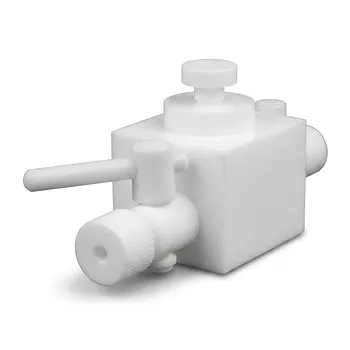
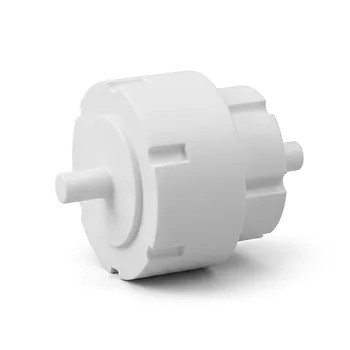
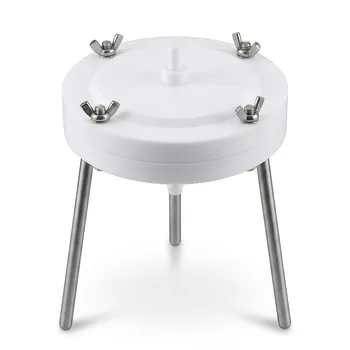
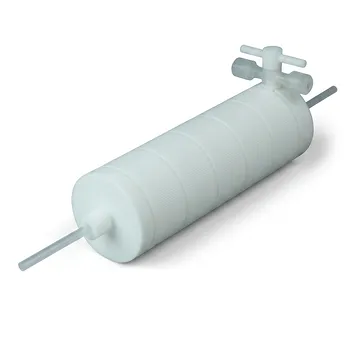
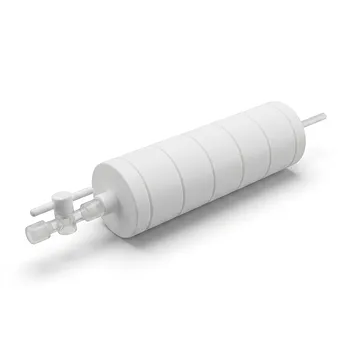
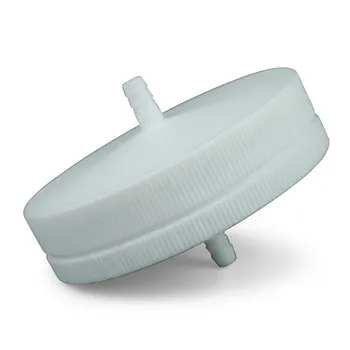
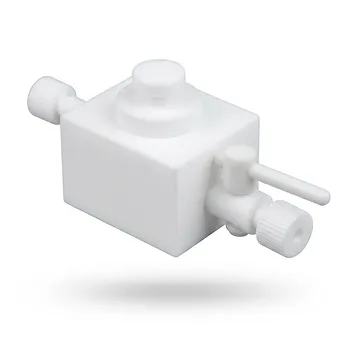
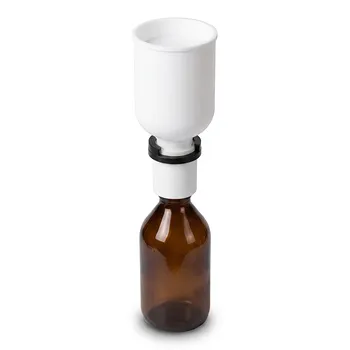
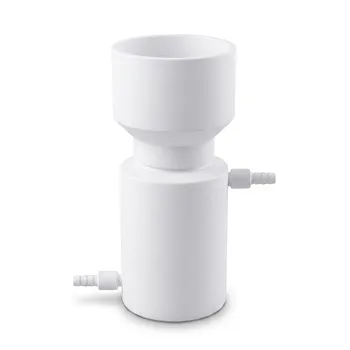
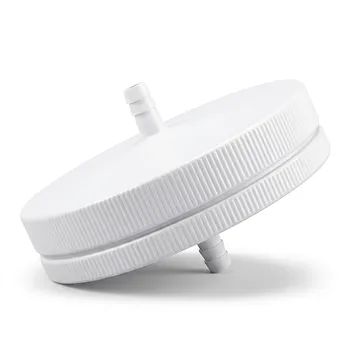
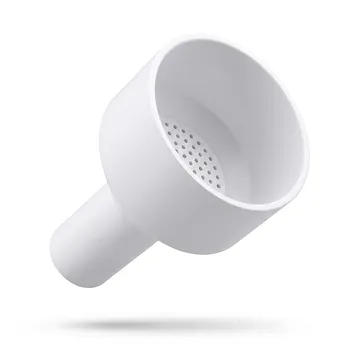
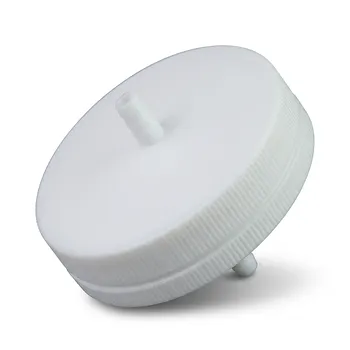
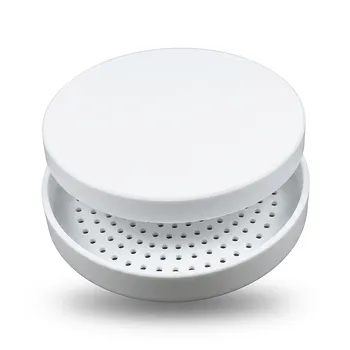
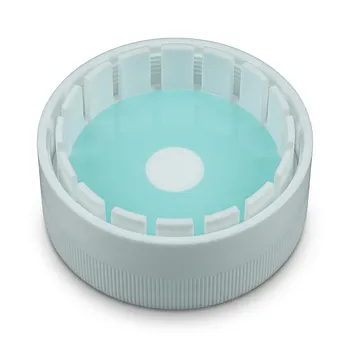
At its core, the primary benefit of a PTFE filter is its extreme resilience. Polytetrafluoroethylene (PTFE) filters offer a unique combination of unparalleled chemical resistance, broad thermal stability, and an inherently water-repelling (hydrophobic) nature. This makes them exceptionally reliable for aggressive filtration applications where other materials would quickly degrade.
The true value of a PTFE filter lies not just in its individual properties, but in their combination. This synergy makes it the definitive choice for applications involving aggressive chemicals, extreme temperatures, or sensitive analytics where filter integrity and sample purity are non-negotiable.

The Three Pillars of PTFE Filter Performance
The exceptional performance of PTFE filters stems from three fundamental material characteristics that set it apart from other filter media.
Unmatched Chemical Inertness
A key advantage of PTFE is its resistance to nearly all industrial chemicals, acids, bases, and aggressive solvents.
This inertness ensures the filter membrane will not break down, swell, or release contaminants when exposed to harsh substances, protecting both the filtration process and the purity of the sample.
Extreme Thermal Stability
PTFE filters operate reliably across an exceptionally wide temperature range, typically from -196°C to +260°C (-320°F to +500°F).
This allows them to be used in high-temperature processes like hot gas filtration or applications involving sterilization without compromising their structural integrity.
Naturally Hydrophobic Surface
PTFE is naturally hydrophobic, meaning it repels water while allowing gases to pass through freely.
This property is ideal for applications like sterile venting, air sampling, or protecting sensitive equipment from aqueous aerosols and moisture. This non-stick, non-wetting surface also minimizes sample loss.
Critical Properties for Analytical Purity
Beyond its raw durability, PTFE is a preferred material in laboratory and analytical settings where accuracy is paramount.
High Purity and Low Extractables
PTFE is a very pure material. This means the filter itself will not leach interfering chemicals into the sample being filtered.
This characteristic is crucial for "interference-free chemical determinations," ensuring that the analytical results reflect the sample, not contamination from the filter media.
Low Tare Mass and High Strength
The material has a low and stable weight (low tare mass), which is critical for gravimetric analysis where collected particulates must be weighed accurately.
Despite its flexibility, PTFE also exhibits high flexural strength, contributing to its durability during handling and use.
Understanding the Trade-offs and Limitations
While powerful, PTFE is not universally applicable. Understanding its limitations is key to using it effectively.
The Hydrophilic Limitation
The primary trade-off of PTFE is its hydrophobicity. It will naturally resist the flow of water-based (aqueous) solutions.
To filter aqueous liquids, you must either use a special pre-treated hydrophilic PTFE filter or pre-wet the standard PTFE membrane with a low-surface-tension solvent like isopropanol or methanol before use.
Poor Bonding Properties
PTFE's non-stick surface makes it difficult to bond to other materials.
In high-pressure applications, PTFE membranes often require a physical support structure, such as being laminated onto a polypropylene backing, to provide additional mechanical strength.
Making the Right Choice for Your Application
Use these guidelines to determine if a PTFE filter is the correct choice for your specific goal.
- If your primary focus is aggressive chemical or solvent filtration: PTFE is the safest and most reliable choice due to its near-universal chemical inertness.
- If your primary focus is air/gas sampling or venting: PTFE's hydrophobic nature makes it ideal for preventing moisture from passing while allowing gases to flow freely.
- If your primary focus is high-purity analytical work: The low extractable content and chemical stability of PTFE ensure your sample's integrity is not compromised by the filter itself.
- If your primary focus is filtering aqueous solutions: You must use a specifically designed hydrophilic PTFE filter or be prepared to pre-wet a standard PTFE membrane with a solvent.
By understanding these core characteristics, you can confidently leverage PTFE's strengths for the most demanding filtration tasks.
Summary Table:
| Key Benefit | Description | Ideal For |
|---|---|---|
| Chemical Inertness | Resists nearly all acids, bases, and solvents. | Aggressive chemical filtration. |
| Thermal Stability | Operates reliably from -196°C to +260°C. | High-temperature processes and sterilization. |
| Hydrophobicity | Repels water, allows gas flow. | Air/gas sampling, sterile venting. |
| High Purity | Low extractables for accurate analytics. | Sensitive laboratory and analytical work. |
Need a reliable PTFE filter solution for your demanding application?
At KINTEK, we specialize in manufacturing high-precision PTFE components, including custom filters, seals, and liners. Whether you're in the semiconductor, medical, laboratory, or industrial sector, our expertise ensures you get a component that delivers unmatched chemical resistance, thermal stability, and purity for your critical processes.
We prioritize precision production and offer custom fabrication from prototypes to high-volume orders. Let us provide you with a PTFE solution that guarantees performance and protects your sample integrity.
Contact KINTEK today to discuss your specific filtration needs and get a quote!
Visual Guide

Related Products
- Custom PTFE Filtration System Acid Resistant High Purity Semiconductor Grade Chemical Processing Filter
- Custom PTFE Vacuum Filter with Integrated Sieve Plate and Corrosion Resistant Particle Free Design for High Purity Water Quality Analysis
- Custom PTFE Water Quality Filter 202mm Diameter 142mm Membrane Corrosion Resistant Holder
- High Purity PTFE Filter with PFA Valve Connections and Integrated Sieve Plate for Corrosive Fluid Processing
- PTFE Corrosion Resistant Filter with PFA Valve Connections and Integrated Sieve Plate
People Also Ask
- What makes PTFE filtration systems advantageous for industrial and scientific use? Unmatched Chemical & Thermal Stability
- What sizes and pore options are available for PTFE filters? Choose the Right Filter for Your Application
- What steps are involved in selecting the proper PTFE filter? A 4-Step Guide to Optimal Filtration
- How does the hydrophobicity of PTFE filters benefit their use? Ensure Uninterrupted Gas Flow and Solvent Filtration
- What temperature resistance do PTFE filters offer? Unmatched Thermal Stability from -200°C to +260°C