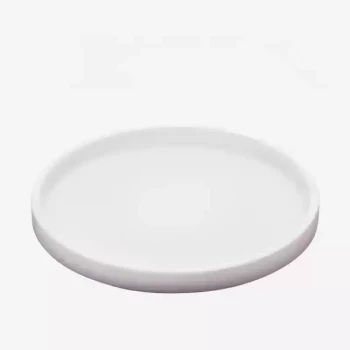
In short, a Teflon sheet acts as an essential protective barrier in heat pressing. It prevents your design's ink and adhesive from sticking to your heat press, shields your fabric from scorching, and helps distribute heat evenly for a more professional and consistent result.
The core function of a Teflon sheet is not just to add a layer, but to act as low-cost insurance for your projects. It is the single most effective tool for preventing the most common and costly heat press failures: scorched garments and a contaminated heat platen.
The Three Pillars of Protection
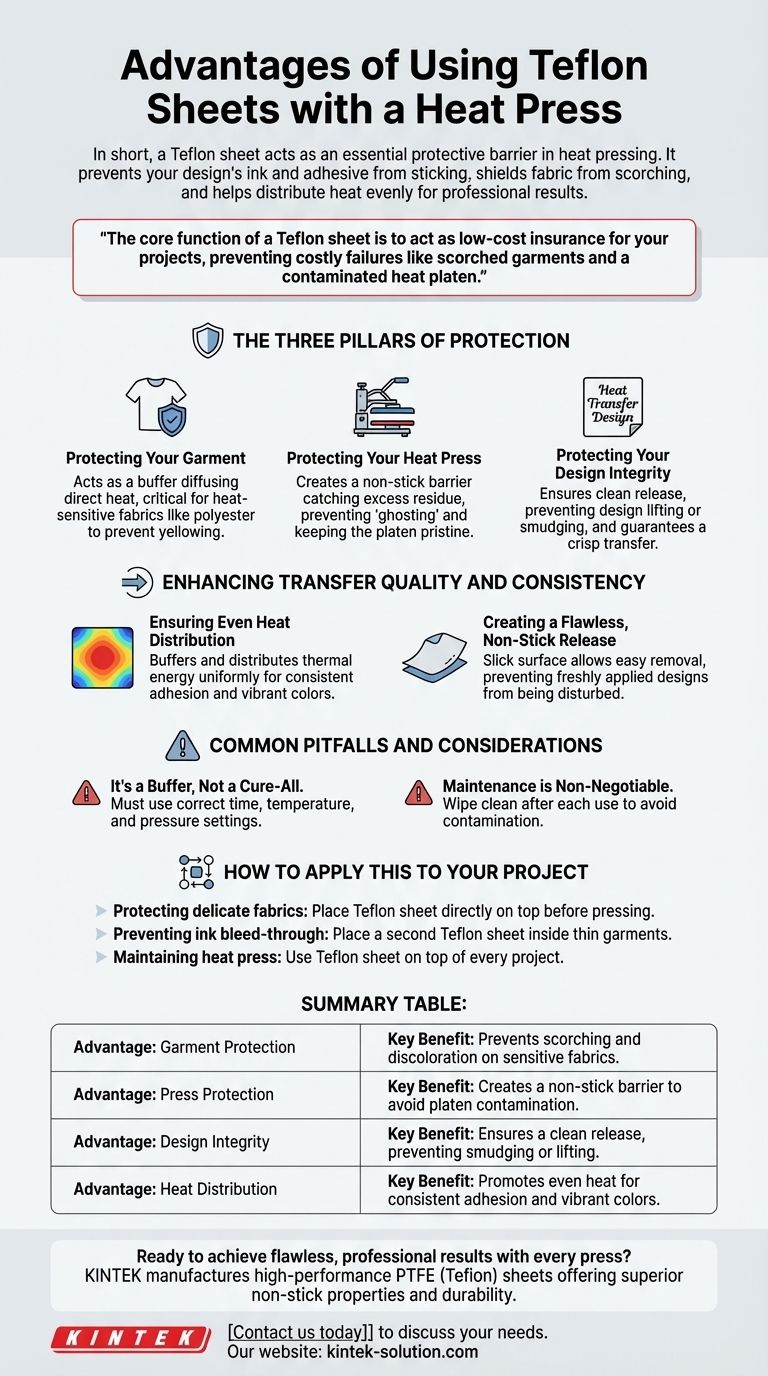
A Teflon sheet’s primary role is to serve as a durable, reusable shield. It protects the three critical elements of any heat press project: the garment, the heat press itself, and the integrity of your transfer.
Protecting Your Garment
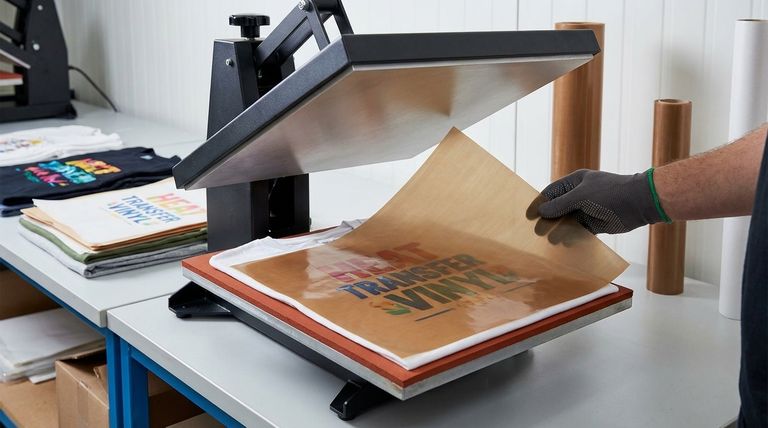
The most immediate risk in heat pressing is applying too much heat and scorching your material. A Teflon sheet sits between the hot platen and your garment, acting as a buffer that diffuses direct heat.
This protection is especially critical for heat-sensitive fabrics like polyester or blends, preventing the yellowing or discoloration that can ruin a project.
Protecting Your Heat Press
Without a protective layer, inks, dyes, and vinyl adhesives can easily transfer to the upper platen of your press. This residue can then be accidentally re-transferred to your next project, causing "ghosting" or unwanted marks.
A Teflon sheet creates a non-stick barrier that catches any excess residue, keeping your platen pristine. This simple step saves you significant time on cleaning and prevents cross-contamination between jobs.
Protecting Your Design Integrity
The non-stick surface ensures that heat transfer vinyl (HTV) or other transfer types do not accidentally adhere to the press platen upon opening. This guarantees a clean release every time, preventing the design from being lifted or smudged.
Enhancing Transfer Quality and Consistency
Beyond simple protection, a Teflon sheet actively improves the quality of your finished product by creating a more controlled and stable environment for the transfer to occur.
Ensuring Even Heat Distribution
While a quality heat press provides even heating, a Teflon sheet helps to further buffer and distribute that thermal energy uniformly across the entire surface of your design.
This leads to more consistent adhesion and vibrant colors, eliminating frustrating issues where corners of a design don't stick properly or colors appear uneven.
Creating a Flawless, Non-Stick Release
The slick, low-friction surface allows for the easy removal of the garment after pressing. This smooth process is vital for preventing any part of the freshly applied, hot design from being disturbed.
Common Pitfalls and Considerations
While incredibly useful, a Teflon sheet is a tool, not a substitute for proper technique. Understanding its limitations is key to using it effectively.
It's a Buffer, Not a Cure-All
A Teflon sheet can help prevent scorching, but it cannot fix fundamentally incorrect settings. You must still use the correct time, temperature, and pressure recommended for your specific material and transfer type.
Maintenance is Non-Negotiable
The sheet is only effective if it's clean. Any ink or adhesive residue left on the sheet from a previous job will be pressed directly onto your next one. Always wipe the sheet clean after each use to ensure it remains a protective barrier, not a source of contamination.
How to Apply This to Your Project
Using a Teflon sheet correctly depends on your primary goal for a specific task.
- If your primary focus is protecting delicate fabrics: Always place the Teflon sheet directly on top of your garment and transfer paper before pressing to prevent scorching.
- If your primary focus is preventing ink bleed-through on thin garments: Place a second Teflon sheet inside the garment to stop sublimation ink or other dyes from bleeding to the back layer.
- If your primary focus is maintaining your heat press for the long term: Make it a non-negotiable rule to use a Teflon sheet on top of every single project to keep your platen clean and avoid residue buildup.
Ultimately, integrating a Teflon sheet into your workflow is a simple, inexpensive step that yields professional consistency and protects your valuable equipment.
Summary Table:
| Advantage | Key Benefit |
|---|---|
| Garment Protection | Prevents scorching and discoloration on sensitive fabrics. |
| Press Protection | Creates a non-stick barrier to avoid platen contamination. |
| Design Integrity | Ensures a clean release, preventing smudging or lifting. |
| Heat Distribution | Promotes even heat for consistent adhesion and vibrant colors. |
Ready to achieve flawless, professional results with every press?
KINTEK manufactures high-performance PTFE (Teflon) sheets and components designed for demanding applications. Our sheets offer superior non-stick properties, heat resistance, and durability, ensuring your heat press projects are consistently perfect while protecting your valuable equipment.
Contact us today to discuss your needs, from custom-sized prototypes to high-volume orders, and see how KINTEK's precision can benefit your operation.
Visual Guide
Related Products
- Custom PTFE Beaker 350ml High Purity Laboratory Vessel with Optional Lid for Hot Plate Heating Applications
- Custom PTFE Beaker Thickened Design for Hot Plate Heating 200C Heat Resistant Anti Deformation Laboratory Glassware Alternative
- High Purity PTFE Beaker Heat Resistant Laboratory Chemical Vessel Hot Plate Compatible Non Deforming Fluoropolymer Labware
- Custom Thickened PTFE Beaker High Temperature Hot Plate Heating Resistant Precision Laboratory Labware Customizable Fluoropolymer Vessel
- High Purity Custom PTFE Beaker 5000ml With Lid Hot Plate Heating Compatible High Temperature Chemical Labware
People Also Ask
- Why is the material of the reaction vessel critical for tribocatalytic degradation? Boost Your Catalytic Yield!
- How does thermal stability and fluoride evolution impact the performance of high-temperature PTFE laboratory vessels? Uncover the key factors for reliable operation.
- How does the atmospheric environment (nitrogen versus air) influence the thermal degradation limits and operating safety of high-temperature fluoropolymer laboratory vessels? Nitrogen vs Air: Thermal Limits & Safety
- How do PTFE fluoropolymer laboratory vessels and tubing handle exposure to different types of organic solvents? Discover key insights for optimal solvent compatibility.
- What are the limitations of pure PTFE in high temperature applications? Understanding the 200°C Ceiling