The Invisible Failure Point
In complex systems, failure rarely announces itself. It begins quietly—as microscopic corrosion from an aggressive chemical, as a subtle increase in energy draw from friction, or as imperceptible contamination that ruins a high-purity process. These are the problems that keep engineers awake at night.
They are not issues of brute force, but of finesse and resilience. They demand a material that doesn’t just withstand a single stressor, but one that can remain indifferent to a hostile environment. This is the world where Polytetrafluoroethylene (PTFE), often known by its trade name Teflon, moves from being a simple non-stick coating to a critical engineering component.
But leveraging PTFE effectively is a discipline. It requires appreciating that its true genius is not found in a single feature, but in the synergy of its properties—and, just as importantly, in understanding its inherent limitations.
The Core Properties: A Synergy of Extremes
To the material scientist, PTFE is a marvel of simplicity: a long chain of carbon atoms, each completely shielded by fluorine atoms. This deceptively simple structure is the source of its extraordinary capabilities.
The Physics of Effortlessness: Near-Zero Friction
PTFE possesses one of the lowest coefficients of friction of any known solid, comparable to wet ice on wet ice. This isn’t just a curiosity; it is a fundamental mechanical advantage.
In practice, this means parts can slide past each other with minimal energy loss and heat generation. It’s the closest engineers can get to defying friction in a solid-state material, making it a first-choice solution for bearings, slide plates, and wear strips where lubrication is impractical or impossible.
The Chemistry of Indifference: Absolute Inertness
The carbon-fluorine bond is exceptionally strong, making PTFE almost universally inert. It refuses to react with nearly all industrial chemicals, acids, and bases.
This property is a shield. For a chemical processing plant, a PTFE-lined vessel isn't just a container; it's an assurance against corrosion that could compromise both the equipment and the product. In semiconductor manufacturing, it guarantees the ultra-high purity required for fabricating flawless microchips.
The Resilience to Heat: Thermal Stability Under Pressure
Many polymers deform or degrade at high temperatures. PTFE, however, maintains its structural integrity and key properties in continuous service up to 500°F (260°C).
This stability makes it indispensable for components in thermal processes, such as heat-sealing equipment, industrial presses, and insulators for high-temperature wiring. It performs its duty when other materials have long since failed.
The Engineer's Humility: Acknowledging PTFE's Limits
The psychology of great engineering isn’t about finding a perfect material, but about understanding the trade-offs of an imperfect one. Acknowledging PTFE's weaknesses is as critical as celebrating its strengths.
The Trade-off for a Slippery Surface: Mechanical Softness
PTFE is a relatively soft material. It has poor tensile strength and is susceptible to "creep"—a slow, permanent deformation under a persistent load.
This is the most important trade-off to respect. PTFE is a brilliant surface material, but it is not a structural one. It cannot bear significant weight or impact. The engineering decision here is to use it for what it is, not for what one wishes it was.
The Paradox of Smoothness: Vulnerability to Abrasion
While its low friction prevents adhesive wear, PTFE is not highly resistant to abrasive wear. Hard, sharp particles can gouge or scrape its surface.
An engineer must consider the entire system. In an environment with abrasive contaminants—like a slurry pump or a dusty conveyor—a different material or a filled grade of PTFE might be necessary to ensure a long service life.
The Hidden Force: High Thermal Expansion
Compared to metals, PTFE expands and contracts significantly with temperature changes. A design that fails to account for this will fail in practice.
This requires foresight. Engineers must design with tolerances that allow for this movement, preventing parts from binding, warping, or failing under thermal stress. It’s a classic case of designing for the real world, not just the blueprint.
The Decision Matrix: When to Choose PTFE
The choice to use PTFE should be a deliberate one, based on a clear-eyed assessment of the primary engineering challenge.
| Primary Engineering Goal | PTFE Suitability & Application | Key Consideration |
|---|---|---|
| Reduce Friction & Wear | Excellent for low-load bearings, wear strips, and slide plates. | Avoid high structural loads; PTFE is not for load-bearing applications. |
| Handle Corrosive Chemicals | Definitive Choice for linings in pipes, tanks, and vessels; seals and gaskets. | Ensure the operating temperature remains within PTFE's stable range. |
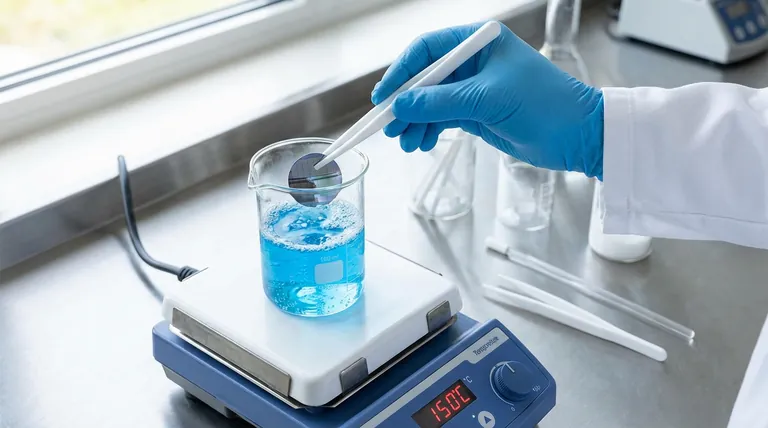
| Maintain Purity in a Process | Excellent for labware, medical tubing, and semiconductor fluid handling components. | Its non-stick, inert surface prevents adhesion and leaching. |
| Create a Non-Stick, Hot Surface | Ideal for release liners, heat-sealing surfaces, and industrial mold release. | Its thermal stability is key, but check for abrasive elements in the process. |
| Achieve High Mechanical Strength | Unsuitable. | PTFE's softness and tendency to creep make it a poor choice for structural parts. |
Choosing a material is about understanding its character. PTFE is not a blunt instrument; it is a precision tool. Its value is unlocked not just by knowing its impressive datasheet specs, but by designing with a deep respect for its boundaries.
At KINTEK, we work within these principles, manufacturing precision PTFE components—from custom seals and liners to high-purity labware—that solve specific challenges in the semiconductor, medical, and industrial fields. We deliver solutions built on a pragmatic understanding of both the material's power and its limitations.
If your challenge requires a material that offers unparalleled chemical resistance, ultra-low friction, and high-temperature performance, let's determine if a precisely fabricated PTFE component is the right answer for you. Contact Our Experts
Visual Guide

Related Products
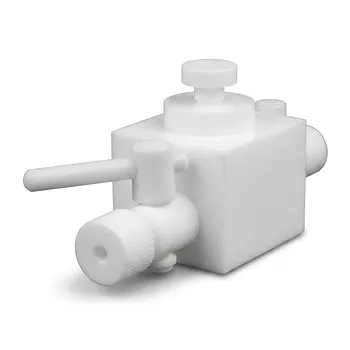
- High Corrosion Resistant PTFE Faucet Polytetrafluoroethylene Valve for Chemical Storage Drums and Fluid Transfer Systems Customizable Industrial Grade
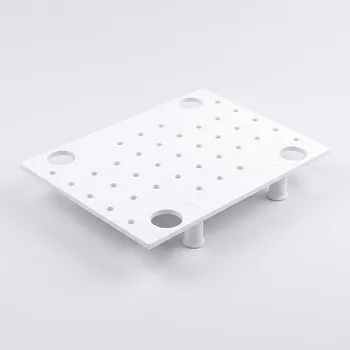
- High Temperature Resistant PTFE Thermal Insulation Board Corrosion Resistant Metal Free Fluoropolymer Stand for Ultra Clean Laboratories
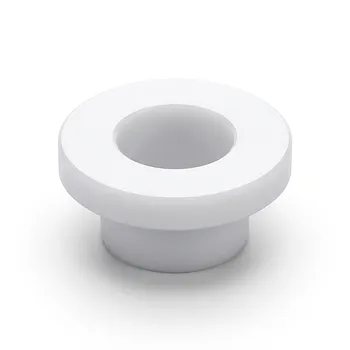
- Custom PTFE Insulating Gaskets Corrosion Resistant Teflon Seals Tailored Engineering Plastic Components
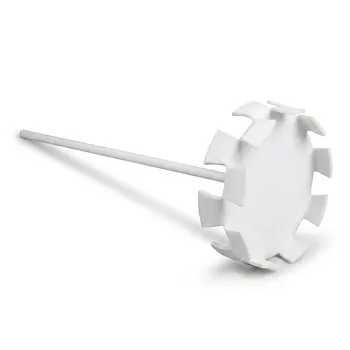
- Customizable PTFE Rods for Advanced Industrial Applications
- PTFE Corrosion Resistant Filter with PFA Valve Connections and Integrated Sieve Plate
Related Articles
- Your Plant's Silent Killer: Why Standard Valves Fail with Corrosive Chemicals (And the One Fix That Works)
- Why Your PTFE Valves Leak at High Temperatures—and How to Master the "Creep" Factor
- Beyond Exotic Alloys: The Smarter Strategy for Corrosion-Proof Fluid Control
- The Hidden Culprit Behind Batch Contamination: Why Your Sterilization Protocol Might Not Be Enough
- Why Your Samples Stick and Your Valves Jam: Solving Laboratory Inefficiencies Through Surface Science