The primary alternative considered was Virgin PTFE. This material was evaluated for its superior performance characteristics, specifically its exceptionally low coefficient of friction and greater strength when compared to Acetal-based products like Turcite.
The core decision between these materials hinges on a classic engineering trade-off: Virgin PTFE offers the peak of theoretical performance, while Turcite represents a more pragmatic balance of high performance, cost-effectiveness, and availability.
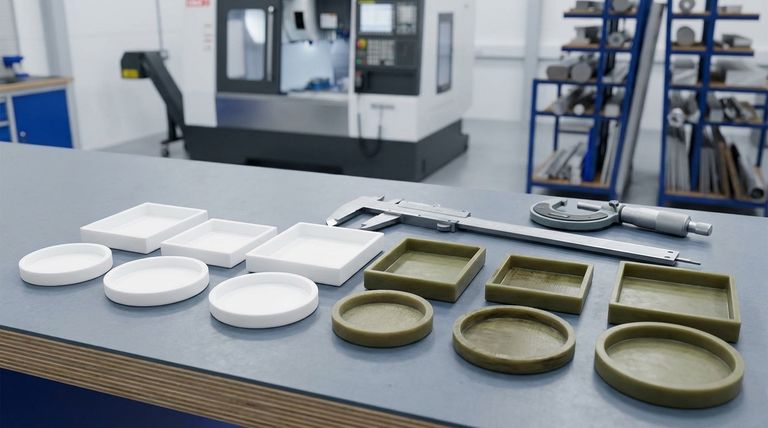
Deconstructing the Material Properties
When selecting a material for a dynamic application like fork bushes, the specific mechanical properties are the most critical factors. The goal is to minimize resistance to movement while ensuring long-term durability.
The Critical Role of Friction
Fork bushes must allow two surfaces to slide against each other with minimal resistance. A lower coefficient of friction directly translates to smoother, more responsive suspension action by reducing "stiction"—the initial force required to start movement.
Why Virgin PTFE Excels
Virgin PTFE (Polytetrafluoroethylene) is renowned for having one of the lowest coefficients of friction of any known solid material. This inherent slipperiness means it requires very little energy to overcome static friction, providing exceptionally smooth and predictable movement right from the start.
Understanding Strength and Durability
The term "stronger" in this context refers to the material's ability to resist wear and deformation under load. PTFE exhibits excellent compressive strength and wear resistance, making it highly suitable for bushings that must endure the constant sliding and pressure changes within a suspension fork.
The Practical Hurdles of Ideal Materials
While Virgin PTFE has superior technical specifications on paper, real-world engineering decisions are always governed by practical constraints.
The Prohibitive Cost Factor
High-performance materials often come with a significant price premium. Virgin PTFE is substantially more expensive than Acetal-based compounds, which can make it an impractical choice for many projects or products where budget is a key consideration.
Sourcing and Availability
Specialized materials can also be difficult to procure, particularly in specific dimensions or regions. The noted difficulty in sourcing PTFE in Australia highlights how supply chain logistics can override an otherwise ideal technical choice.
Understanding the Trade-offs: Turcite vs. PTFE
Choosing between these materials is not about which is "better" in absolute terms, but which is more appropriate for the specific application's goals and constraints.
Performance Ceiling vs. Practical Application
Virgin PTFE represents the performance ceiling—the best possible outcome if cost and availability are non-issues. Its properties are ideal for high-end, specialized applications where every fraction of reduced friction matters.
The Balanced Solution
Turcite, an Acetal-based composite, is engineered to provide an excellent balance of properties. It offers very low friction and good durability at a fraction of the cost and with much wider availability, making it the superior practical choice for the vast majority of applications.
How to Select the Right Bushing Material
Your final decision should be guided by the primary goal of your project.
- If your primary focus is achieving the absolute lowest friction possible and budget is not a constraint: Virgin PTFE is the technically superior material for its unmatched slickness and strength.
- If your primary focus is an optimal blend of high performance, reliability, and cost-effectiveness: Turcite or similar Acetal-based products provide a robust and proven solution that meets the needs of most applications.
Ultimately, effective material selection is about aligning the ideal engineering properties with real-world economic and logistical realities.
Summary Table:
| Property | Virgin PTFE | Turcite (Acetal-based) |
|---|---|---|
| Coefficient of Friction | Exceptionally Low | Low |
| Strength & Wear Resistance | High | Good |
| Cost | High | Cost-Effective |
| Availability | Can be Difficult | Widely Available |
| Best For | Peak Performance, Unconstrained Budget | Balanced Performance & Practicality |
Need High-Performance PTFE Components for Your Application?
At KINTEK, we specialize in manufacturing precision PTFE components—including seals, liners, and custom bushings—for the semiconductor, medical, laboratory, and industrial sectors. Whether you require the superior low-friction properties of Virgin PTFE or a cost-effective alternative, our expertise in custom fabrication from prototypes to high-volume orders ensures you get the right solution.
Contact us today to discuss your project requirements and let our team deliver the durability and performance your application demands.
Visual Guide
Related Products
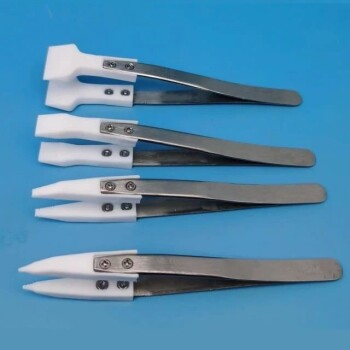
- Custom PTFE Parts Manufacturer for Teflon Parts and PTFE Tweezers
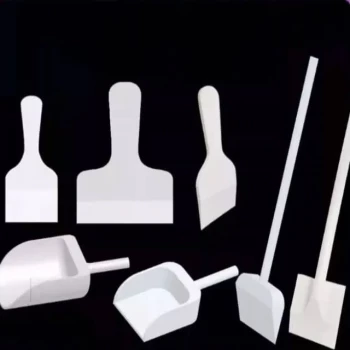
- Customizable PTFE Scrapers and Shovels for Demanding Applications
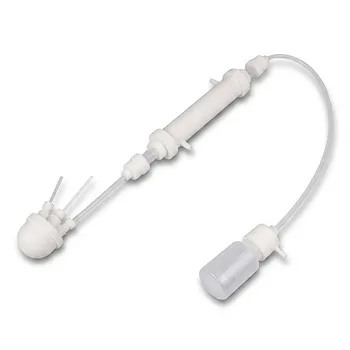
- Custom PTFE Constant Pressure Separatory Funnel Corrosion Resistant Low Background Labware for PFA Flasks
- Custom PTFE Condensation Reflux Apparatus with Serpentine Coil and Flask Collection System for Corrosive Chemical Processing
- Custom PTFE Sleeves and Hollow Rods for Advanced Applications
People Also Ask
- What are the key properties of Teflon (PTFE) used in custom parts? | Achieve Peak Performance
- What are the main advantages of using PTFE for custom parts? Solve Complex Engineering Challenges
- What design considerations are important for custom PTFE parts? Design for Performance & Reliability
- What industries use custom PTFE parts and for what purposes? Solve Critical Challenges with High-Performance Materials
- What industries benefit most from custom PTFE parts? Solve Extreme Environment Challenges