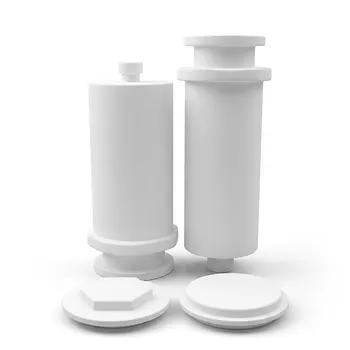
At their core, the key advantages of PTFE shaft seals are their exceptional chemical resistance, high-temperature tolerance, and an inherently low coefficient of friction. These properties allow them to operate reliably in extreme industrial environments where traditional elastomeric seals would quickly fail.
PTFE seals are not merely an alternative to conventional seals; they are an engineered solution designed specifically for demanding applications involving aggressive chemicals, high temperatures, high pressures, or dry-running conditions.

The Core Strengths of PTFE Sealing Technology
The unique material properties of Polytetrafluoroethylene (PTFE) are what set these seals apart. They solve critical engineering challenges that are beyond the capabilities of standard rubber or nitrile seals.
Unmatched Chemical Inertness
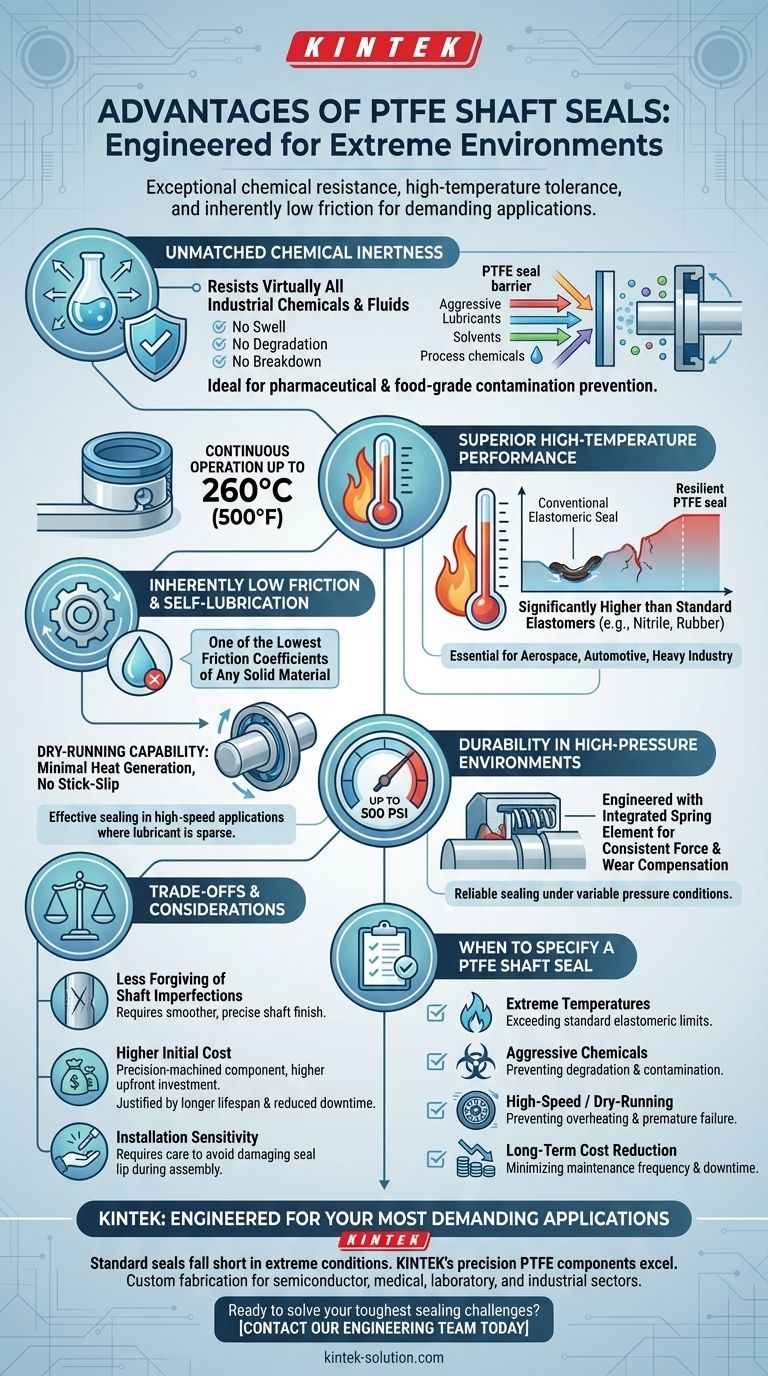
PTFE is inert to almost all industrial chemicals and fluids. This means the seal will not swell, degrade, or break down when exposed to aggressive lubricants, solvents, or process chemicals.
This property is critical for ensuring seal integrity and preventing contamination of the system media, making it ideal for pharmaceutical or food-grade applications.
Superior High-Temperature Performance
PTFE seals can operate continuously at temperatures up to 260°C (500°F). This is significantly higher than most elastomeric materials, which would become brittle or melt under similar conditions.
This high-temperature capability makes them essential for equipment in aerospace, automotive, and heavy industrial settings where high operational heat is a given.
Inherently Low Friction and Self-Lubrication
PTFE has one of the lowest friction coefficients of any solid material. This allows it to run with minimal heat generation and torque loss, even without lubrication.
This "dry-running" capability is a major advantage, as it prevents the "stick-slip" behavior common in other seals and allows for effective sealing in high-speed rotating applications where lubricant may be sparse.
Durability in High-Pressure Environments
Engineered PTFE seals are designed to withstand high pressures, with some capable of handling up to 500 psi.
An integrated spring element often provides a consistent force, ensuring the seal lip remains in constant contact with the shaft and compensates for wear, even under variable pressure conditions.
Understanding the Trade-offs
While powerful, PTFE seals are a specialized component, and their selection requires an understanding of their limitations compared to more flexible elastomeric seals.
Less Forgiving of Shaft Imperfections
Because PTFE is a harder, less compliant material than rubber, it requires a smoother and more precise shaft surface finish to create a reliable seal. Minor scratches or imperfections that a flexible rubber seal might conform to can create a leak path for a PTFE seal.
Higher Initial Cost
PTFE seals are typically precision-machined components, not mass-molded. This results in a higher upfront cost compared to standard elastomeric seals.
However, this cost is often justified by a significantly longer lifespan and reduced equipment downtime, leading to a lower total cost of ownership in demanding applications.
Installation Sensitivity
The relative stiffness of PTFE means that installation requires more care. Special tools or procedures may be necessary to avoid damaging the precision-machined seal lip during assembly.
When to Specify a PTFE Shaft Seal
Choosing the right seal depends entirely on the operational demands of your equipment.
- If your primary focus is operating in extreme temperatures: PTFE is the default choice when service temperatures exceed the limits of conventional elastomeric seals.
- If your primary focus is compatibility with aggressive chemicals: PTFE's chemical inertness is non-negotiable for preventing seal degradation and fluid contamination.
- If your primary focus is high-speed or dry-running applications: PTFE's self-lubricating, low-friction nature is essential for preventing overheating and premature failure.
- If your primary focus is minimizing long-term operating costs in harsh environments: The durability of PTFE provides a superior return on investment by drastically reducing maintenance frequency and downtime.
Ultimately, specifying a PTFE seal is a strategic decision to engineer reliability into equipment that operates beyond standard conditions.
Summary Table:
| Key Advantage | Key Benefit |
|---|---|
| Chemical Inertness | Resists virtually all industrial chemicals, preventing degradation and contamination. |
| High-Temperature Performance | Operates continuously up to 260°C (500°F), far exceeding standard elastomers. |
| Low Friction & Self-Lubrication | Enables dry-running and high-speed operation with minimal heat generation. |
| High-Pressure Durability | Engineered to withstand pressures up to 500 psi with consistent sealing force. |
Engineered for Your Most Demanding Applications
When your equipment operates in extreme conditions—high temperatures, aggressive chemicals, or high-speed rotations—standard seals fall short. That's where KINTEK's precision PTFE components excel.
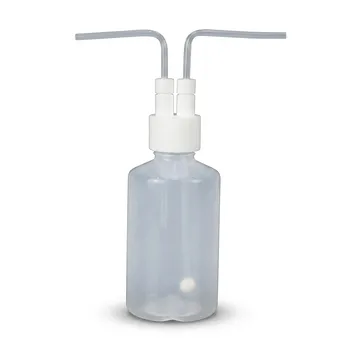
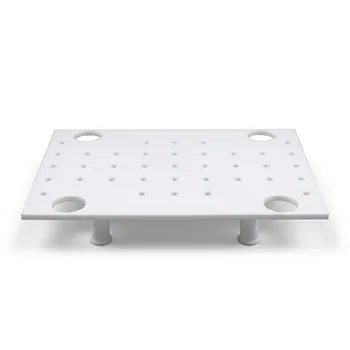
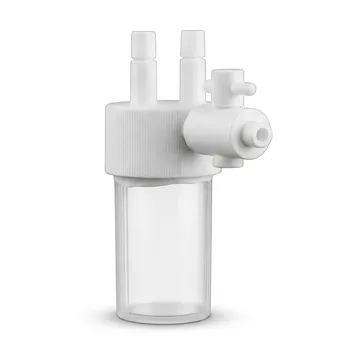
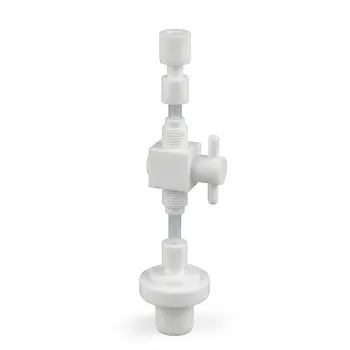
We manufacture high-performance PTFE shaft seals, liners, and labware specifically for the semiconductor, medical, laboratory, and industrial sectors. Our custom fabrication process, from prototypes to high-volume orders, ensures you get a sealing solution engineered for reliability and a lower total cost of ownership.
Ready to solve your toughest sealing challenges? Contact our engineering team today to discuss your application requirements.
Visual Guide
Related Products
- Custom PTFE Insulating Gaskets and Corrosion Resistant Fluoropolymer Seals for Industrial Electrical Applications
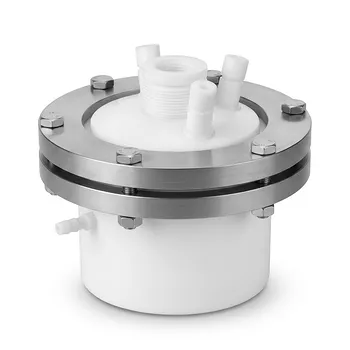
- Custom PTFE Reaction Apparatus Flange Sealed Corrosion Resistant Jacketed Vessel with Stirring Bar and Thermometer Ports
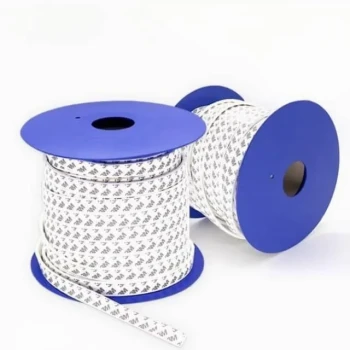
- Custom PTFE Sealing Tapes for Industrial and High Tech Applications
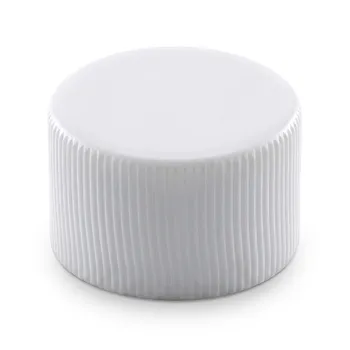
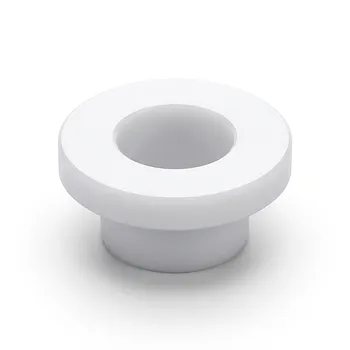
- Custom PTFE Sealing Caps and Corrosion Resistant Low Background Teflon Adapters
- Customizable High Temperature Resistant Anti Static PTFE Insulating Gaskets Flame Retardant Corrosion Proof Industrial Seals
People Also Ask
- What are the three primary types of PTFE available for gaskets and seals? Choose the Right Material for Your Application
- Why is PTFE an ideal material choice for sealing gaskets, valves, and fluid transfer tubing exposed to extremely aggressive chemicals? Discover Its Superior Chemical Resistance and Reliability
- How is PTFE utilized in seals and gaskets? Leverage Its Chemical & Temperature Resistance
- What are the key properties of PTFE that make it suitable for seals and gaskets? Unlock Superior Sealing Performance
- How are custom PTFE parts used in the automotive sector? Enhance Vehicle Performance & Durability